
Latin American resort operators, campground owners, and rental businesses researching inflatable water parks tend to find two kinds of content: generic global buyer's guides that don't address the region's climate, water access, and permitting realities, or complete-solution product pages with no planning framework attached. This guide fills that gap — modular design logic, installation basics for the region's common site conditions, and the revenue models operators are actually running.
An inflatable water park is built from individual floating or anchored modules — climbing towers, slides, balance beams, trampoline sections — connected into a configurable layout rather than a single fixed structure. This matters more in Latin America than in markets with universal access to engineered pool basins: many installations sit in natural lakes, reservoirs, or coastal lagoons where module count and anchoring spec depend on water depth, current, and seasonal water-level swings rather than a fixed pool footprint. Our full range is under Water Park Modules, and for installations built around a defined pool basin rather than open water, the Complete Water Parks range covers fully specified systems.
Guest throughput, not footprint, should drive the module count — a layout sized only to available water surface routinely under- or over-builds capacity relative to actual demand.
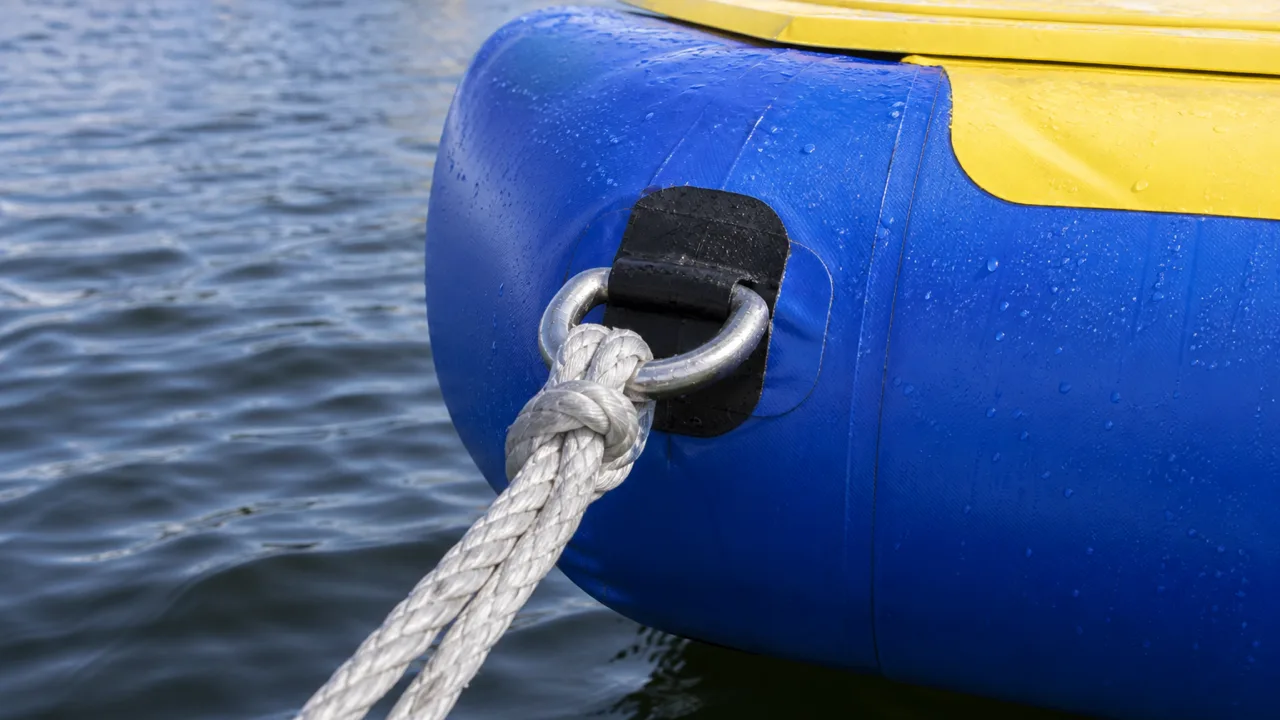
Open-water installation — the more common scenario across Latin American lakes and coastal concessions — requires anchoring rated for current and wind load, and most operators plan for seasonal removal given weather exposure rather than a permanent year-round footprint. An engineered pool or lagoon installation simplifies anchoring to fixed points but caps module count to the available water surface, which is why pool-basin installations tend toward a smaller, higher-density layout rather than a sprawling floating course. Confirm water depth, current, and seasonal level variation with your supplier before finalizing a module count — these factors drive anchor spec more than any dry-land equipment consideration.
Requirements vary significantly by country and by whether the water body is under municipal, federal, or private concession control — a lake concession in one country may require an environmental review that a similar installation in another market does not. Confirm the applicable permitting path with local authorities early in planning rather than after equipment has been ordered, since permitting timelines in some jurisdictions can run longer than the equipment's production and shipping lead time combined.
Three models cover most Latin American installations:
Which model fits depends on whether you're running a fixed destination site or a mobile fleet asset — the anchoring, module selection, and even the certification documentation you prioritize differ between the two.
Not every operator needs a full modular water park layout to start. A smaller set of standalone inflatable water games — a single climbing tower, a floating trampoline, an iceberg or balance-beam module — works as either a lower-cost first installation for a smaller site, or as a rotating add-on that a larger operator swaps between events rather than committing to a fixed full-park layout. This is often the more practical starting point for a campground or boutique resort testing guest demand before committing to a full modular course, and the individual units share the same anchoring and site-assessment logic covered above at a fraction of the initial equipment cost.
Freight to Latin American ports, in-country transport to a lake or coastal site (which can exceed port-to-warehouse costs in remote installations), staffing for a supervised attraction, and seasonal storage or maintenance during the off-season all factor into the real cost of ownership beyond the unit price. Our breakdown of what drives inflatable water park cost covers these line items in more depth, and our water management guide for inflatable pools and water parks covers filtration and water treatment planning that applies to engineered-basin installations specifically.
Can an inflatable water park be installed in a natural lake rather than a pool?
Yes — this is the more common installation type across Latin America. Open-water installations need current- and wind-rated anchoring rather than the simpler fixed-point anchoring a pool basin allows, and most operators plan for seasonal removal given weather exposure.
How many modules does a first installation typically need?
Most small resort and campground operators start with 6-10 connected modules sized to a defined swim area, scaling up only once guest volume and water surface area justify a larger layout.
Whether you're planning a first floating course for a lake concession or a full resort-scale installation, our team can help match module count and anchoring spec to your specific site conditions.