This isn't about production timelines or copyright risk — our custom printing production timeline guide and licensed character copyright guide cover those. This one is about the actual printing techniques themselves: what full-print, hand-painted, and banner-art methods each look like, and which one fits a given design and budget.
Full-print applies dye-sublimation printing directly to the PVC tarpaulin fabric before it's cut and welded into panels, allowing photorealistic imagery, gradients, and complex multi-color artwork across the entire surface of the unit. This is now the dominant method for branded advertising inflatables and custom event structures because it removes the color-count and complexity limitations of older methods. The tradeoff is higher per-unit cost and a design lead time for color-matching and print-file preparation before production starts.
Hand-painting, typically done with airbrush equipment directly onto assembled or pre-assembled panels, remains in use for specific effects — gradient shading on themed slides, character faces requiring sculptural depth cues, and small production runs where full-print's setup process isn't cost-effective. Hand-painted work depends heavily on individual painter skill, so consistency across multiple units of the same design is harder to guarantee than with digital full-print, which reproduces identically unit to unit.
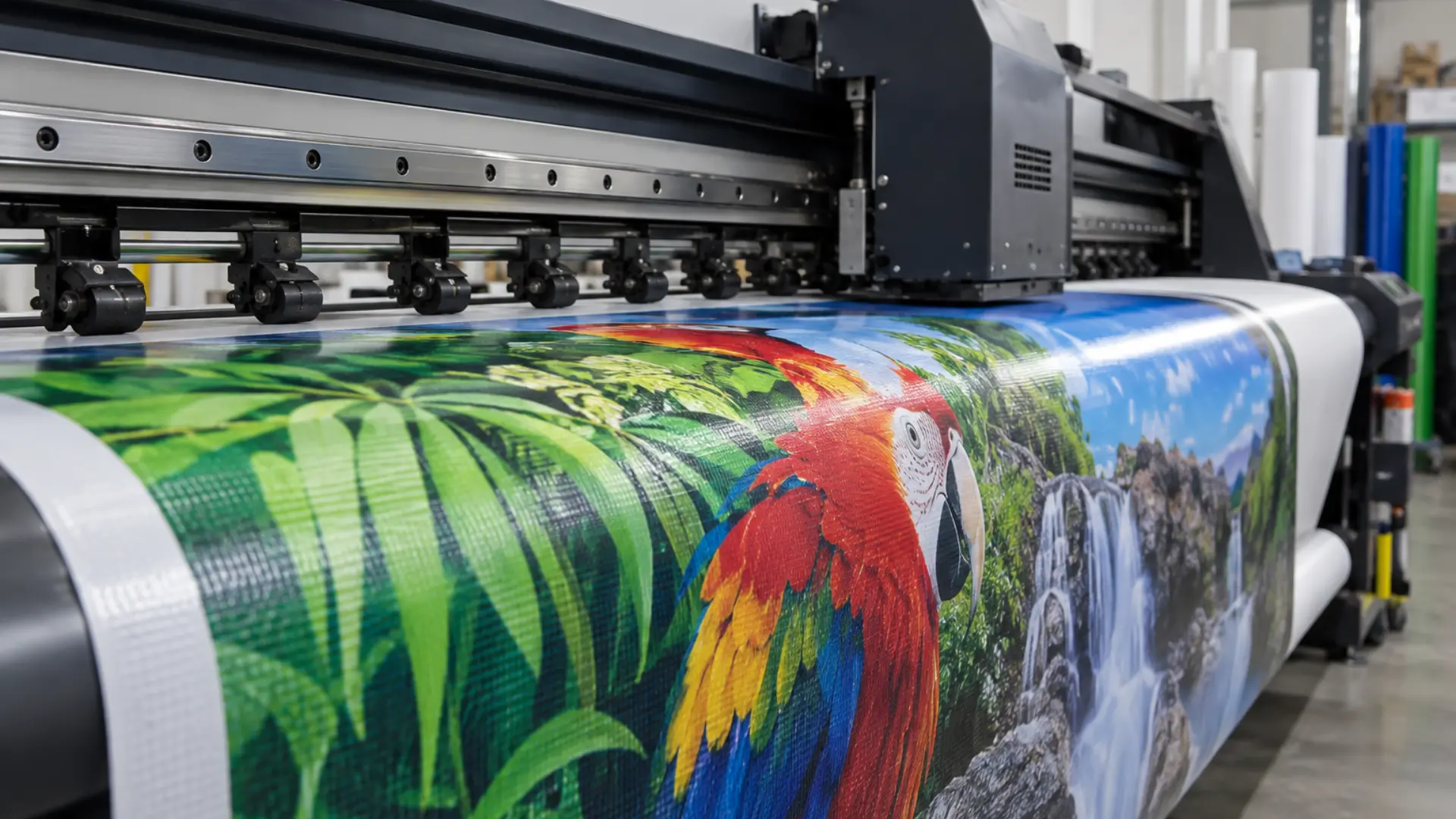
Banner art applies separately printed vinyl or banner material panels onto the inflatable's surface, either heat-welded or mechanically attached, rather than printing the graphic directly onto the tarpaulin. This is the fastest and lowest-cost option for simple logo placements or graphics that need to be swappable — a rental operator running the same unit for multiple clients can change the applied banner panel without replacing the whole unit. The visible seam around the panel edge is the main tradeoff versus full-print's seamless surface.
Full-print is the right call for complex branded artwork ordered in any meaningful volume, since the digital process scales without added per-unit labor. Hand-painting suits one-off custom effects or low-volume decorative work where a specific artistic look matters more than unit-to-unit consistency. Banner art suits simple, swappable branding on a budget, particularly for advertising inflatables that rotate between different client logos over their service life.
Full-print generally carries a higher minimum order quantity than banner art, since the print-file setup and color-matching cost needs to be spread across enough units to justify it, while banner art panels can often be produced economically even for a single unit. Buyers testing a new design or ordering a small custom batch should factor printing method into MOQ expectations early, rather than assuming the base product's standard minimum order applies regardless of decoration method — our MOQ reality check by category covers realistic minimums, but printing method can shift those numbers up or down within a category.
A print-ready or near-print-ready artwork file (vector format where possible, high-resolution raster as a fallback), the Pantone or RGB color codes for brand-critical colors, and the target surface area for the graphic are the three inputs a factory needs to accurately quote a printing method and lead time. Sending only a low-resolution logo or a verbal color description forces the factory to guess, which is the single most common cause of color-mismatch disputes after production. If your design includes gradients or photorealistic elements, confirm upfront that full-print is the intended method, since banner art and hand-painting both handle gradients differently and may require design simplification.
Does full-print fade faster than hand-painted or banner art under UV exposure?
Fade resistance depends more on the ink and coating quality than the method itself. Reputable full-print dye-sublimation processes generally hold color as well as or better than hand-painted work under sustained outdoor UV exposure, though all three methods benefit from UV-resistant topcoat treatment for long-term outdoor use.
Can a unit combine more than one printing method?
Yes — it's common to full-print the main body artwork while using an applied banner panel for a swappable sponsor logo area, giving fixed branding permanence where it matters and flexibility where client logos rotate.
Is banner art suitable for licensed character artwork?
The printing method itself doesn't change the copyright risk profile discussed in our licensed character guide — that risk applies equally regardless of which of these three techniques produces the final graphic.
Does printing method affect how the unit should be cleaned?
Full-print and hand-painted surfaces can generally be cleaned the same way as unprinted PVC tarpaulin. Applied banner panels warrant slightly gentler cleaning around the panel edges, since aggressive scrubbing at the seam line can loosen the weld or adhesive over repeated cleaning cycles faster than it would on the surrounding solid fabric.
Tell our team which printing method fits your design complexity and order volume, and we'll confirm lead time and MOQ specific to that production route.