
An indoor play zone in a shopping mall is a different commercial arrangement than a rental fleet or a standalone FEC — the equipment decisions come second to the revenue model and the mall's own operational requirements. This is what mall management and prospective operators need to work through before signing a lease for the space.
Malls typically offer two structures for an indoor play zone: a flat monthly rent (simpler for both sides, but shifts all revenue risk to the operator) or a percentage-of-revenue lease, sometimes with a minimum guarantee, tied to reported ticket or session sales. Percentage leases are increasingly common for play zones specifically because mall management has direct incentive to route foot traffic toward it, and a shared-upside structure aligns that incentive better than flat rent does. Operators should get clarity on how "revenue" is defined and audited before signing, since disputes over reported sales are the most common source of landlord-tenant friction in this arrangement.
Mall management evaluates a play zone proposal primarily on dwell-time impact, not just the rent it generates directly — a family that stays an extra 45-90 minutes at a play zone typically spends more elsewhere in the mall on that visit. If you're pitching a play zone to a property manager, lead with dwell-time and secondary-spend data from comparable installations rather than just the play zone's own projected revenue, since that's the argument that gets internal buy-in from mall leasing committees.
Indoor mall installations face fire code and egress requirements that outdoor or rental-fleet setups don't — clear aisle widths around the installation, compliance with the mall's own fire marshal walkthrough, and equipment placement that doesn't obstruct emergency exits or sprinkler coverage. These requirements are set by the property and local fire code, not by the inflatable's own safety certification, so confirm them with mall facilities management before finalizing a floor plan, not after equipment is delivered.
Malls generally require the same class of liability coverage and additional-insured status that municipal and other public-venue installations require, covered in more detail in our municipal parks procurement guide — the insurance logic is the same even though the venue type is different, since both are high-foot-traffic public spaces with a landlord requiring protection.
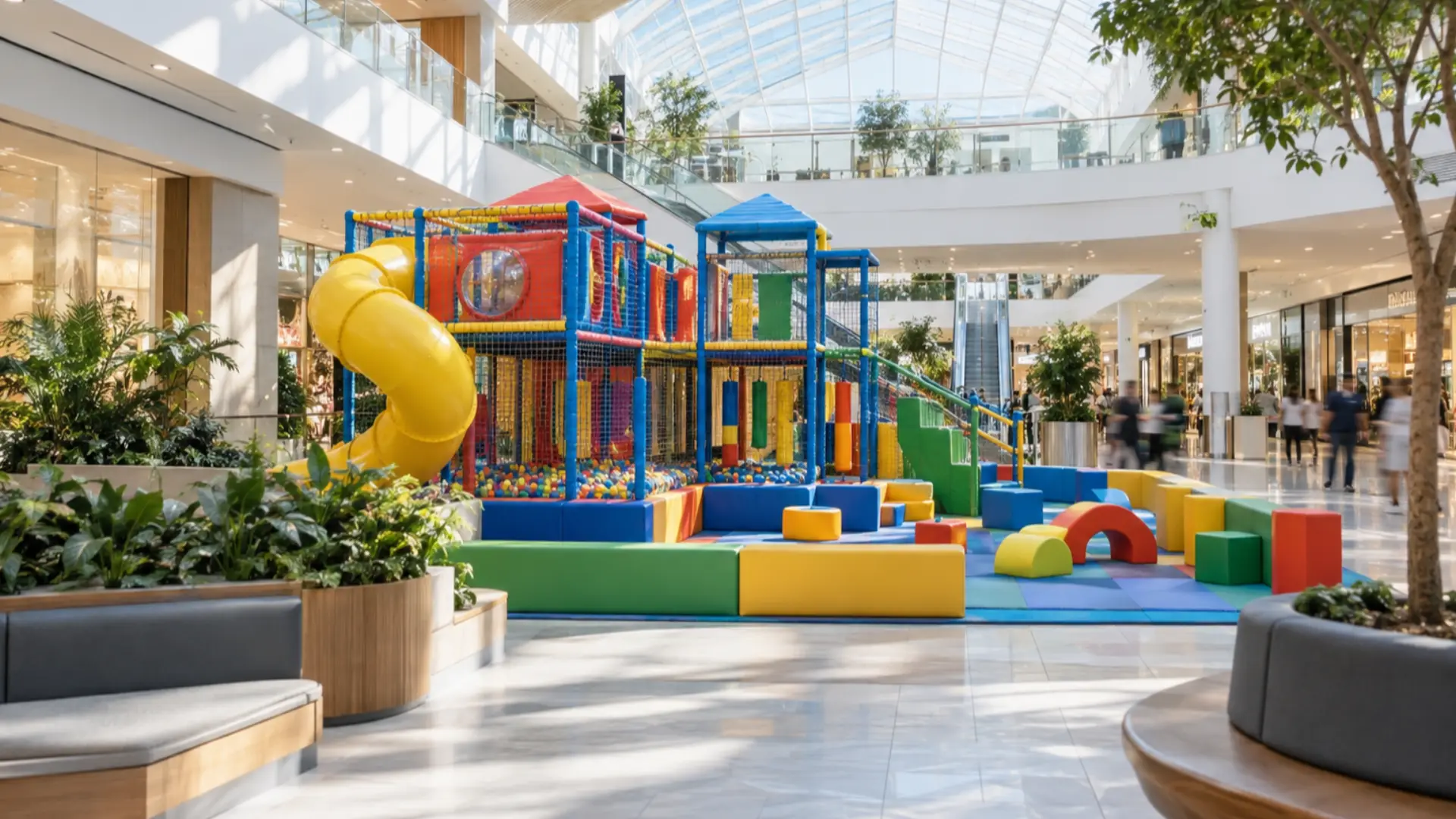
Ceiling height, noise level (mall management is sensitive to blower noise bleeding into adjacent retail spaces), and a low-maintenance, easy-clean surface matter more in a mall setting than in an outdoor rental context. Soft play equipment is a common fit for younger-child mall installations specifically because it runs quieter than a large constant-air structure and fits lower ceiling clearances typical of retail floor plans.
Some malls run the play zone directly with their own staff, while others contract a specialized operator to run it under a revenue-share or management-fee arrangement. A third-party operator brings existing staffing systems and equipment-maintenance experience, which reduces the mall's operational burden but adds a layer of margin; malls without any existing recreation-operations experience should apply the same vetting rigor covered in our supplier and operator vetting checklist before signing a management contract.
Mall play zones tend to work best on multi-year leases rather than short-term arrangements, since equipment investment and staff training don't pay off on a season-by-season basis the way a seasonal outdoor attraction does. Some operators negotiate a seasonal capacity boost — additional temporary equipment during December and summer break peaks — on top of a stable year-round core installation, similar to the RFQ planning approach in our guide to writing an accurate equipment RFQ, applied here to a phased indoor rollout rather than a single order.
Is a percentage lease always better for the mall than flat rent?
Not necessarily — a percentage lease shares upside but also shares the risk of an underperforming installation, so a mall confident in the location's foot traffic might prefer the predictability of flat rent, while a mall testing a new concept in an uncertain location often prefers a percentage structure with a lower minimum guarantee.
How is play zone revenue typically measured and audited?
Most agreements use point-of-sale reporting from the operator's ticketing system, with the mall retaining audit rights to review transaction records periodically. Clarity on which sales count (walk-in sessions vs party bookings, for example) should be defined in the lease before opening, not after a dispute arises.
Do mall play zones need the same certification as outdoor commercial inflatables?
Yes — structural safety certification requirements don't change based on venue type, though indoor installations add fire code and egress requirements on top of standard equipment certification.
If you're evaluating equipment for a mall installation, share your ceiling height, floor plan, and target age group with our team for a fit-specific recommendation.