
Two suppliers quote the same 5 × 5 m commercial bouncer. One quote is roughly a third of the other. Neither is lying, and neither is automatically the better buy. The gap is almost always traceable to four line items: PVC weight, seam construction, blower spec, and how far the certification actually reaches.
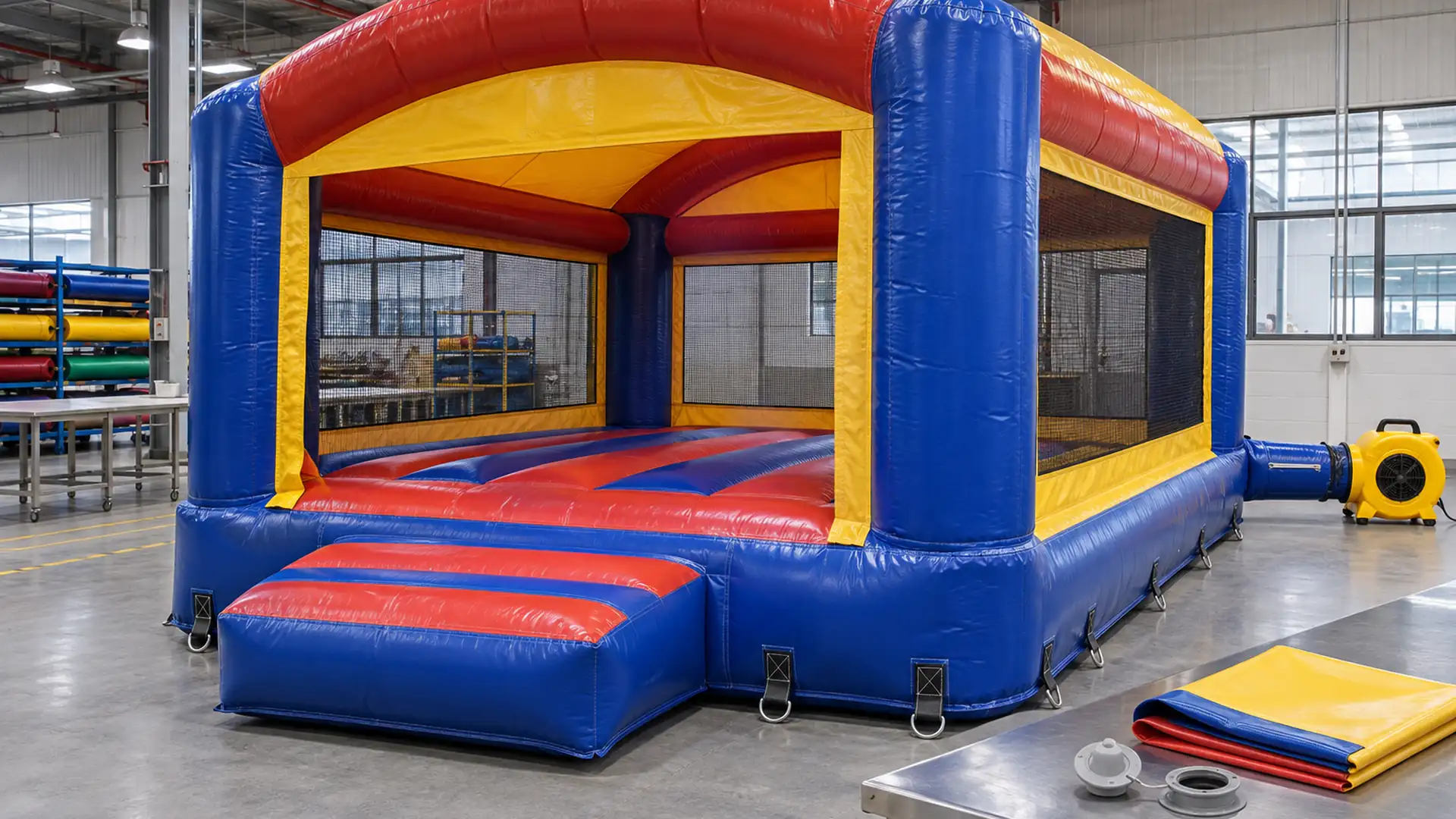
This is a working comparison for buyers who already have two or three quotes in hand and need to decide which one is worth signing. A bounce house price and quality comparison only works when both columns describe the same build, which is why the four components below are the ones to put side by side.
Buyers often sort inflatables by size — 4 × 4 m, 5 × 5 m, 6 × 6 m. Size drives material volume and shipping cost, but it does not tell you which build you are buying. The commercial inflatable quality tiers that matter are set by how hard the unit works:
A large unit from the entry band and a small unit from the high band can sell at similar money. The size tells you nothing about which one survives three seasons of weekend rental.
Two numbers appear on every material spec: the yarn count (D, denier) and the finished thickness (mm). A common entry-band base cloth is around 1000D at roughly 0.55 mm finished PVC. Commercial builds move up to 1100D and heavier at around 0.9 mm, with the exact gram weight depending on coating and the factory's own standard.
What changes for the buyer:
Do not buy on denier alone. A 1000D cloth with a well-formulated coating often outlasts a heavier cloth of unknown origin, which is why batch material certificates matter more than the number on the cover page.
Seams are where commercial units fail first. Stitched seams are fast and cheap; high-frequency welded seams take longer and need better tooling. The practical differences show up under load and after wet use.
Ask for seam samples from the actual production run, not from a showroom unit, and ask how many metres of seam the factory welds per shift. That number tells you more about consistency than any brochure claim.
A commercial inflatable runs continuously — often six to ten hours. That means the blower is a wear part, not an accessory.
Entry-band quotes usually include the cheapest blower that will inflate the unit. Mid and high band should specify a serviceable unit with a defined duty rating.
Anchor points per square metre, anchor hardware, and the stated wind limit are all engineering decisions, not extras. A unit with fewer anchor points needs a lower operating wind ceiling to stay safe, which directly limits its rental days.
Compare the anchor count and the wind rating on both quotes. If one quote has no stated wind limit, it has not been engineered to one.
Every serious factory can produce a certificate. The question is what the certificate covers.
A generic certificate covering "inflatable products" adds little. A model-specific report that matches the unit, the material and the revision is what your inspection body or your customer's insurer will ask for. For a deeper discussion of build quality against use case, see our comparison of commercial versus residential bounce houses, where the dividing lines are drawn by usage intensity rather than price.
Some of the price difference is real engineering; some is presentation. Be deliberate about which you are buying:
Put both quotes into one table and fill in the gaps before discussing price:
| Line item | Entry quote | Mid quote | High quote | What to ask |
|---|---|---|---|---|
| Base cloth (D / mm / gsm) | Batch certificate for this order | |||
| Seam method | Sample from production run | |||
| Anchor points and wind limit | Written rating, not verbal | |||
| Blower model and duty rating | Serviceable parts list | |||
| Certification scope | Model-specific report number | |||
| Packed size and weight | Measured, not estimated | |||
| Spare parts included | Consumables list |
If a supplier cannot fill a row, that row is the negotiation. Our guide to comparing factory quotes covers how to keep that comparison honest across two currencies and two shipping terms.
The mistake is buying the entry band for a mid-band duty cycle and discovering it in year two. The second mistake is paying for the high band when the unit will run twelve weekends a year.
A price band is a list of engineering decisions, not a quality label. Ask for the four components in writing — cloth specification, seam method, blower duty rating, anchor and wind rating — plus the certification scope, and the comparison becomes arithmetic. For a wider view of how categories and build types map to fleet planning, start from our commercial bouncers range and the inflatable castles range, or read our product guide and pricing overview before you shortlist suppliers.