
When a seam opens on an inflatable during a rental, stop letting new riders on, bring everyone off the unit calmly, and only then decide what happens next. Take the unit out of use if the opening is on a load-bearing seam, near an anchor point or on a slide, if it is getting bigger, or if any part of the unit no longer holds its shape. Don't attempt a repair on site unless the supplier's instructions allow that type of damage to be fixed that way. If you are unsure, treat the unit as out of service for the rest of the event.
Most crews notice a seam opening as a change in how the unit behaves: a wall that leans, a section that feels soft underfoot, or a hiss of air near a join. The first minutes decide whether the booking ends with a minor inconvenience or an incident, so the crew needs to know the sequence before it happens.
Stop the queue first, so nobody new gets on while you look. Then ask the riders already on the unit to come off one at a time through the entrance, starting with those nearest the damage. Keep the blower running while anyone is still on the unit. Switching it off with riders inside lets the unit sag around them.
Once the unit is empty, keep people away from it. A section with an open seam can fold or lean further, and children tend to return to an inflatable as soon as the adults look away.
Look at four things with the unit empty and the blower running.
Where the opening is. Seams that carry load, such as the joins between walls and floor, around anchor points, along slide lanes and at the base of towers, matter more than a decorative panel. An opening on any of these means the unit stays out of use.
How big it is and whether it is growing. Watch it for a minute. An opening that lengthens, or a thread that keeps pulling through, will not last the rest of the booking.
Whether the unit still holds its shape. Walls should stand straight and the floor should stay firm. If anything leans or sags, the unit is not safe to use.
What the supplier allows. Some suppliers permit a temporary repair to minor, non-structural damage with the materials in their repair kit. If the manual doesn't clearly allow it for this location, don't do it.
Don't tape over a load-bearing seam to finish the event. Tape hides the damage without restoring strength. Don't add a second blower to force the unit back into shape, and don't reduce the number of riders as a way to keep using a damaged unit. Each of these keeps a weakened structure in service while it is under load.
Explain plainly that the unit has developed a fault and has been taken out of use for safety. Offer what you can: a different unit from your vehicle or the depot, another activity, or a revised arrangement for the time lost. Follow your rental agreement on how the fee is handled. Clients are usually more concerned about safety than about the missing hours, provided you act quickly and explain why.
If you regularly work events without a spare unit nearby, consider carrying a smaller backup unit on busy weekends. A short substitution is a far better outcome than a cancelled booking.
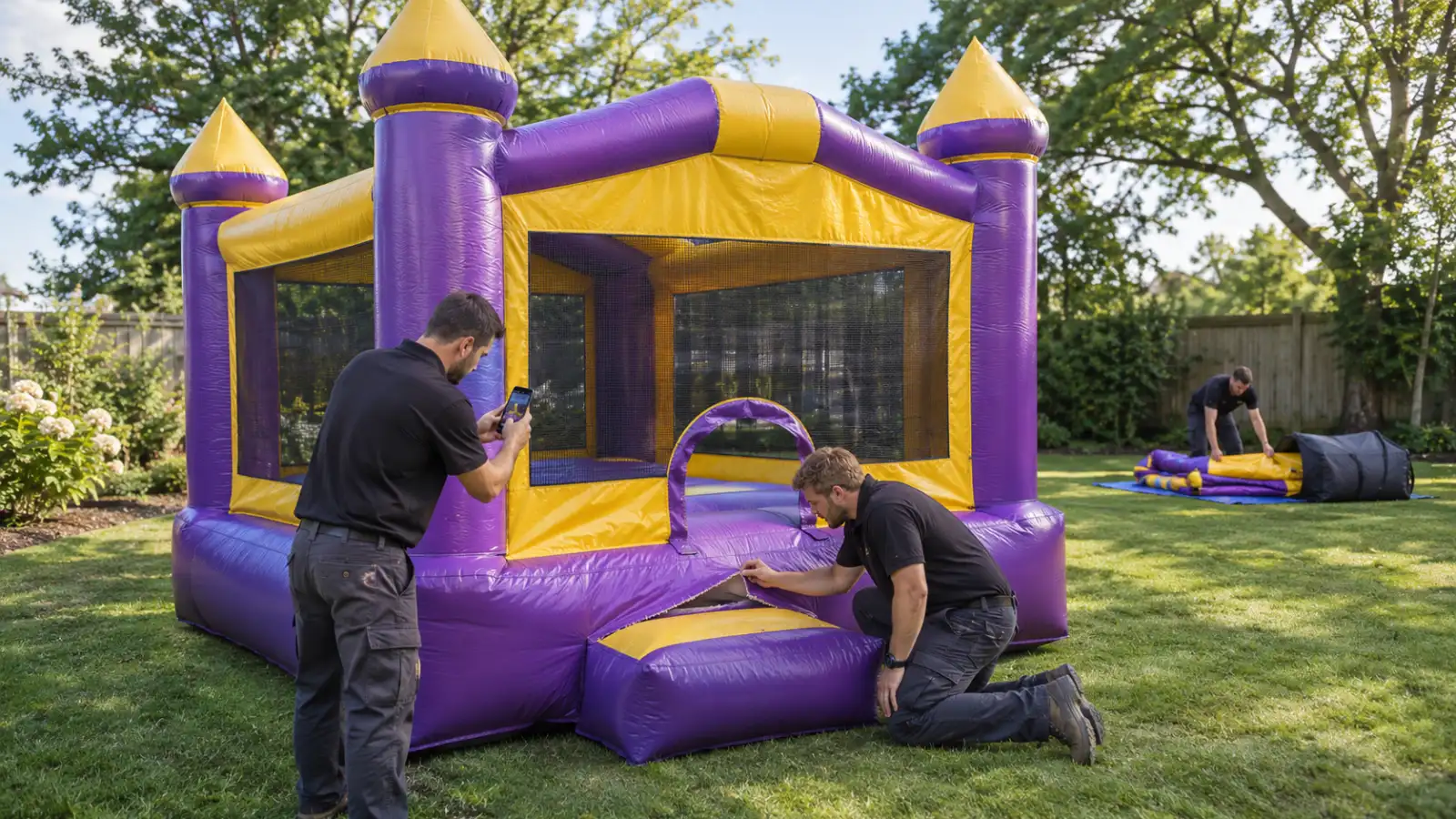
Take a wide photo showing where the opening is on the unit, then close-ups with something in frame for scale. Photograph the model label, and note the time, the weather, how many riders were on the unit and what they were doing when the problem appeared. If the damage may be covered by warranty, these records are the starting point. Our guide to preparing a warranty claim for commercial inflatables lists what a supplier usually asks for.
Pack the unit carefully. Let it dry if it is wet, keep the damaged area from being folded tightly, and label the bag so nobody sends it out on the next booking.
Remove the unit from your booking calendar until it is assessed. Inflate it in a quiet space and check the full length of the affected seam, along with the seams around it. Our guide to diagnosing air loss in inflatables helps you separate seam failure from other causes. Then decide between repair and replacement using our repair or replace decision guide. If the repair needs the factory, see how to send a damaged inflatable back to the factory for repair.
In this illustrative example, a crew is running a commercial castle at a birthday party when a parent notices air hissing near the entrance. The crew lead stops the queue, brings the five children off one at a time, and inspects the unit with the blower running. A seam beside the entrance step has opened about 10 cm and is growing slowly.
Because the seam is at the entrance, where every rider steps, the crew lead takes the castle out of use. The crew sets up the small backup bouncer from the van, and the party continues within twenty minutes. The crew lead photographs the seam, the model label and the setup, and notes the time. At the depot, the factory confirms that the seam needs a factory repair, and the castle is blocked from bookings until it returns.
When you plan your next commercial castle purchase or a backup unit for busy weekends, request a product quote with the model codes you run and how often you work events without a spare.
Planning to buy inflatables for your rental business or event?