
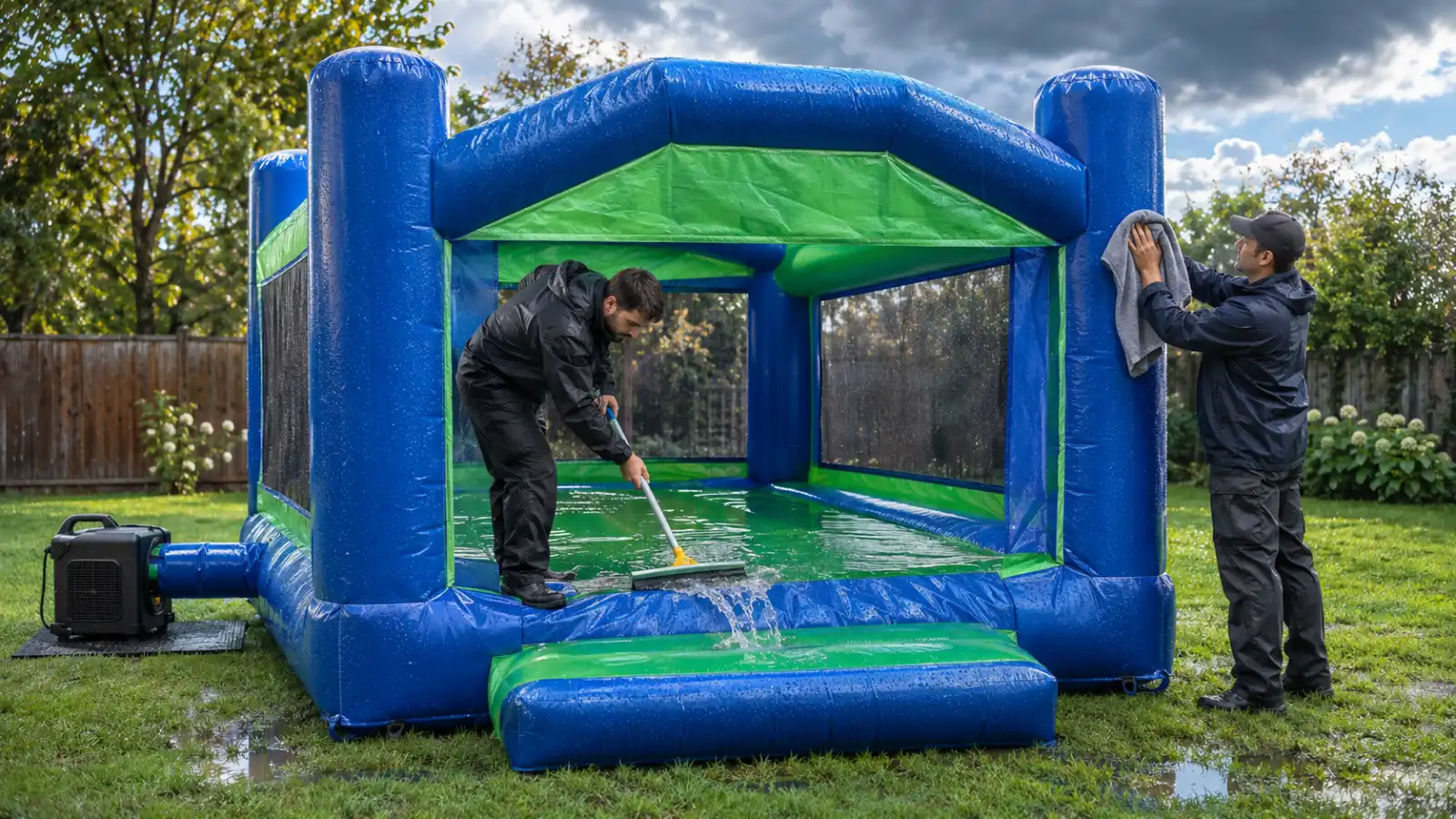
To dry out a bounce house after rain, take it out of use as soon as the rain becomes heavy, then drain the pooled water once it stops, wipe the wet surfaces, and keep the blower running until the seams, corners and folds feel dry to the touch on both sides. Only then fold it. If there is no time to finish drying on site, pack it loosely, keep it apart from dry equipment, and unfold it to dry again at the depot the same day. A bounce house that sits folded and wet overnight starts to smell, and within days it can start to grow mould.
Rain is a normal part of outdoor rental work. The damage comes from what happens after it: water left in the floor, damp folds packed tight in a bag, and a unit that goes to the next booking without anyone checking it dried.
Wet vinyl is slippery, so when rain becomes heavy, stop letting children on and bring those on the unit off calmly. Keep the blower running while anyone is still on it. If lightning or strong wind comes with the rain, follow your shutdown procedure and keep everyone well away from the unit and the blower.
If the rain is light and short, many crews keep the unit inflated with no riders and wait. Water runs off a firm, inflated unit far more easily than off a deflated one lying in puddles.
Bounce houses hold water in predictable places: the bouncing floor, the base of mesh windows, the entrance step and the seams along the bottom of the walls. Once the rain stops, keep the blower running and push standing water toward the entrance with a soft squeegee or broom, or lift one edge of the floor so it drains out. Sponge or towel any water left in corners and along seams.
Check the outside too. The base and the side that sat on wet grass will be soaked even if the top looks dry. A ground sheet under the unit helps, but water can still collect between the sheet and the base.
With the water gone, keep the blower running. Moving air across the inside surfaces is the quickest way to dry a bounce house, and sun and a breeze help the outside. Turn the unit, or lift and prop the edges, so the side that faced the ground gets air as well.
How long this takes depends on the weather, the size of the unit and how much water got into the seams, so there is no fixed time. Judge it by touch. Run your hand along the seams, into the corners and over the base. If anything feels cool, damp or slick, keep going. A unit is dry when both faces and the seams feel dry.
Sometimes the site closes or the next booking cannot wait. In that case, deflate the unit, fold it loosely rather than tightly, and put it in a separate bag or on a tarp in the vehicle, away from dry units. Label it so nobody loads it for another booking.
At the depot, unfold it the same day, inflate it in a covered space with good airflow, and dry it fully before you fold it again. Our storage SOP for commercial inflatables covers how to store it once it is dry.
A blower that has been rained on needs its own check. Follow the manufacturer's manual for a blower that has been exposed to water: switch it off and disconnect it, let it dry, and check the housing, cable and plug before you use it again. Don't run a blower that has taken on water until it has been checked.
A light musty smell after a damp night usually clears once the unit is fully dried and aired. Dark spots, a smell that stays after drying, or a stain that does not wipe off are signs of mould. Our guide to removing mold and mildew from an inflatable water slide explains treatments that are safe for PVC, and the same approach applies to a bounce house. For water slides, which get wet on every booking, see our step-by-step guide to cleaning and drying an inflatable water slide. For the routine cleaning and disinfection that follows, see our cleaning and disinfection SOP.
In this illustrative example, a crew is running a commercial bounce house at an afternoon birthday party when a thunderstorm arrives. The crew lead brings the children off, switches off the blower once the unit is empty, and keeps everyone away until the storm passes.
When the rain stops, the crew restarts the blower, drains the floor through the entrance and towels the seams. After forty minutes the top is dry but the base is still wet, and the crew has to leave for an evening booking. They fold the unit loosely onto a tarp in the van, labelled as wet, and use a second unit for the evening booking. Back at the depot, the wet unit is inflated in the warehouse with the doors open and left running into the evening. The next morning the crew checks the seams and base, finds them dry, and folds it for storage.
Some designs shed water more easily than others: units with drainage points, fewer recesses that hold water, and a floor that tilts slightly toward the entrance. When you compare models in the commercial bounce house range, ask how the floor drains. When you request a product quote, tell us how often you work outdoors in wet weather.
Planning to buy inflatables for your rental business or event?