An inflatable mascot and a custom inflatable replica solve the same brand activation problem from two different angles. A brand mascot inflatable takes a recognizable character — a cartoon animal, a corporate spokes-figure, a licensed IP property — and scales it to 3-12 meters tall so it becomes the photo magnet of an event. A custom shape inflatable replica does the same job by enlarging a real product: a giant beverage can, an oversized sneaker, a 12-meter car, a hamburger the size of a small house. Both share the same engineering DNA, the same factory workflow, and the same project-based commercial model: each unit is a one-off build, MOQ starts at 1 piece, and the buyer drives the design.
This guide walks marketing agencies, brand activation companies, and IP licensing buyers through how custom-shape inflatables get built, four real B2B case studies, and the buyer mistakes that derail projects.
Unlike catalog inflatables, every oversized inflatable brand piece is a project build. The factory does not have a pre-existing mold for your character or product — it has to be engineered from scratch. Expect six steps:
Total lead time for the first piece: 45-65 days. Buyers planning around a product launch, dealership opening, or trade show date need to start the design conversation at least three months out. For agencies running multi-city activation tours, browsing the broader advertising inflatables category first helps narrow whether a mascot, replica, or simpler attention-driver is the right fit before committing to a custom mold. Compare that against stock promotional formats: a standard air dancer or advertising arch ships from existing tooling in a fraction of the time, since no custom mold or pattern development is needed. See our outdoor advertising inflatables guide for lead times on formats that don't require the full custom-shape engineering process above. If your launch date can't accommodate 45-65 days, a stock format with custom branding printed on it — rather than a fully custom sculptural mold — is usually the faster path to market.
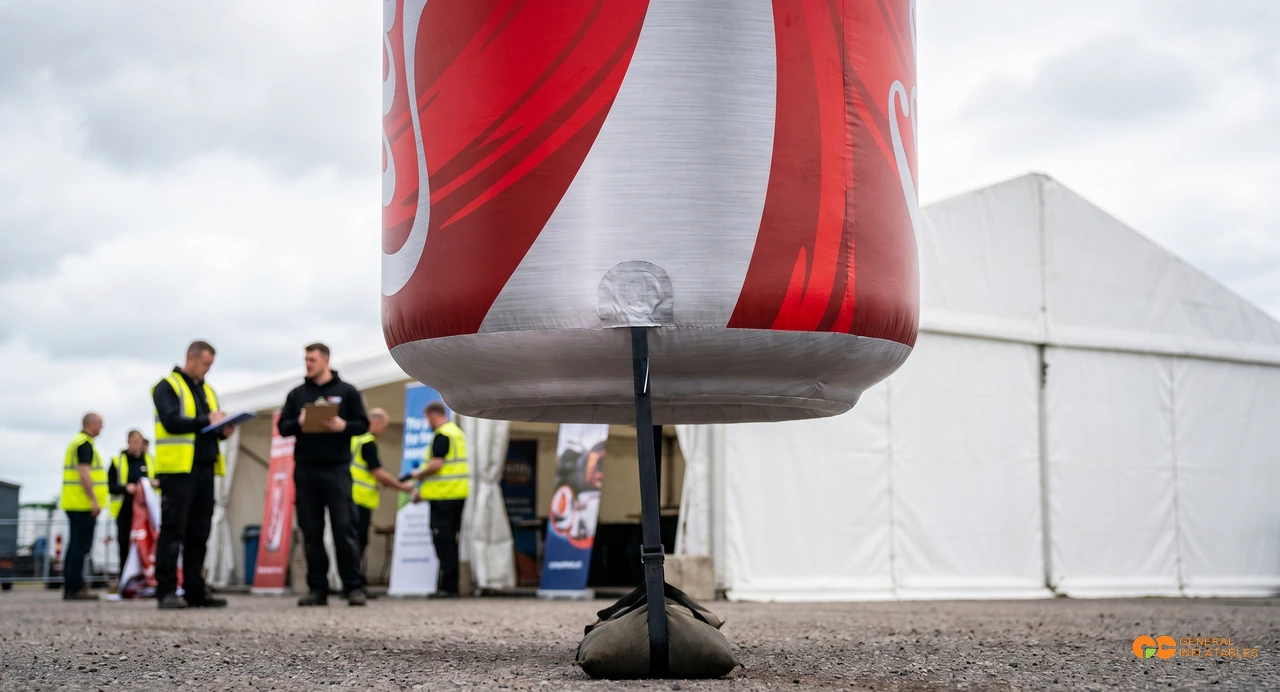
A national beverage brand commissioned an 8-meter-tall custom inflatable replica of a new product can for a 12-city launch tour. Material: 1100D PVC tarpaulin with photo-quality digital print to reproduce the label artwork at scale. The unit travelled in a single 1.5 cubic-meter case, set up in 10 minutes by a two-person crew at each stop. Footfall at activation zones increased roughly 60% versus the brand's prior non-inflatable activations, and the can was re-skinned twice over its lifetime as packaging refreshed.
An auto OEM ordered a 12-meter long, 6-meter wide inflatable replica of a new SUV model for a 50-dealership grand opening tour. One mold, one production unit, deployed across the entire network over six months. The per-event cost amortized to a fraction of building 50 rigid props or shipping a real vehicle to each location, and the replica survived the full tour with one minor seam repair.
Inflatable character advertising with licensed IP is its own commercial category. A theme park licensee commissioned a set of four 5-meter character mascots based on a popular cartoon property for a summer family-event circuit across regional malls. Strict IP rights management was required end-to-end: licensing documentation provided before mold production, approved color references locked at sample stage, and post-tour decommissioning tracked per the license terms. Character mascots in this category typically deliver 30-50 event deployments over a 2-3 year licensing window before retirement.
A consumer electronics brand built a 5-meter inflatable mascot of its flagship smart speaker for an international trade show booth circuit. The unit folds to roughly check-in luggage size, making it air-freightable to 8 shows per year without container shipping. Internal baffles maintain the rounded speaker silhouette under the typical convention-hall airflow.
Body fabric is 1000D-1100D PVC tarpaulin — heavy enough to hold complex geometries under continuous inflation, light enough to fold compactly. Artwork is applied via photo-quality digital print using UV-stabilized inks; outdoor-rated units retain color for 18-24 months of cumulative sun exposure. Internal baffles — sewn-and-welded fabric tethers inside the shape — control silhouette integrity, and they are what keep an "oversized sneaker" actually looking like a sneaker instead of a balloon. Seams are welded (not stitched) at all stress points. Air valves are placed on the underside or rear so they do not interrupt the visual line of the brand asset.
Most custom shape inflatable mascots use continuous-air construction: an open vent at the bottom, a single GFCI-protected blower running 24/7 during the event. This is the right choice for anything used over multiple days, indoors or out, with access to power. Sealed (one-time inflation) construction is the alternative for sculptures displayed where electrical access is impossible — rooftop installations, water features, no-cable architectural placements. Sealed units typically hold shape for 10-14 days before re-inflation. They cost more per unit and cannot be deflated and re-erected easily, so they are reserved for genuinely cable-free placements.
MOQ is 1 piece. Each custom shape is engineered as a project, and the mold and pattern cost is amortized into that first unit. Subsequent units produced from the same mold cost significantly less — often 40-55% of the first-piece total — because the engineering work does not need to be repeated. This is where smart agencies plan ahead: design once, deploy across many locations. A brand commissioning a mascot for a single trade show is leaving budget on the table; a brand commissioning the same mascot for 10-50 franchise launches, dealership openings, or regional activations amortizes the engineering investment across the entire campaign. Pair the mascot with companion attention products like inflatable air dancers at the entrance and an inflatable arch as the activation gateway — sizing and rental-versus-purchase math for the arch component are covered in the inflatable arches buyer guide — and the per-event impact compounds.
For licensed properties — cartoon characters, sports team mascots, entertainment IP — the buyer must have documented IP rights or a valid licensing agreement before the factory begins mold production. The factory does not vet IP ownership; that is the buyer's legal responsibility, and the same is true for trademark protection of original brand mascots. Buyers commissioning an original character should trademark the design before production rather than after, both to protect the asset and to clarify ownership if the agency-client relationship changes. For broader context on how custom artwork moves through factory production with brand-faithful reproduction, the custom-branded artwork workflow guide covers Pantone matching and proofing in detail.
A 5-8 meter mascot is a two-person setup in 5-15 minutes. Larger replicas (12 meters and up) call for a three-person crew and 20-30 minutes. A single GFCI-protected blower runs continuously; anchoring uses sandbags for hard surfaces or ground stakes for turf, with anchor count scaled to wind exposure. Indoor units skip wind anchoring but still need stable ballast against HVAC airflow. Storage volume is the operational win: a 6-meter mascot folds smaller than the equivalent rigid prop, and a 12-meter car replica fits in a single road case rather than a flatbed truck.
The brands getting the strongest ROI from inflatable IP licensing and custom-shape builds treat each piece as a multi-year campaign asset rather than a one-show prop. With a 45-65 day first-piece lead time and a 30-50 event lifetime, the math favours longer planning horizons and bigger deployment footprints — which is exactly the kind of activation campaign these tools were designed for.
A mascot pulls people in up close, but for street-side visibility you also want height — pair it with an inflatable air dancer, the tall animated tube man that catches passing traffic at a dealership or storefront.
We work with marketing agencies and IP licensees on custom mascots, oversized replicas, and themed brand inflatables — from 3D design review through factory production and global shipping. Browse our inflatable balloon catalog and request a custom-shape design consultation.