If you run inflatables commercially in the UK or Ireland, manufacturing to a standard is only half the job. Before that unit earns a single pound on hire, it needs to pass an RPII inflatable inspection — and it needs to pass one every year after that. Buyers who only think about purchase price tend to learn this the hard way: a cheap unit that can't clear its annual test is a unit that sits in the warehouse.
This is one of the most common questions we get from new rental operators and event companies sourcing from us. Here's the practical version of what RPII inspection involves, what inspectors actually look at, and — most importantly — how to buy equipment that gets through it without drama.
RPII stands for the Register of Play Inspectors International. It's the body that registers and accredits inspectors who assess play and leisure equipment, including bouncy castles, slides, obstacle courses and other commercial inflatables. When people in the UK trade talk about getting a unit "RPII inspected" or "RPII tested," they mean having it checked by an inspector who holds RPII accreditation for inflatable play equipment.
An RPII inspection is not a one-off. UK guidance — and the insurers and councils that follow it — expects commercial inflatables to be inspected at least annually by a competent, accredited person. The output is a written report and certification confirming the unit is fit for continued use. No current certificate, no legal hire.
You'll sometimes see PIPA referenced alongside RPII. PIPA is a separate inspection scheme for inflatable play, also widely recognised. The two cover similar ground; what matters for you is that your unit holds a valid annual inspection from a recognised scheme. Most operators stick to one and keep their paperwork current.
An inflatable annual inspection is a structured, head-to-toe assessment of the unit as it stands today — not as it left the factory. Inspectors focus on the things that fail and the things that hurt people:
That last point trips people up more than any other, so it's worth its own section.
EN14960 is the European safety standard for inflatable play equipment — it defines how a unit should be designed and built (anchorage requirements, wall heights, materials, the lot). RPII inspection is the mechanism that checks, year after year, whether a real unit in the field still meets those design expectations.
Think of it as standard versus enforcement. EN14960 is the rulebook the inflatable is built to; the annual RPII inspection is the referee confirming it still plays by those rules after a season of use, transport and weather. An inspector will assess your unit against EN14960 criteria. So a unit that was genuinely built to EN14960 — with correct anchorage, proper wall heights and the right documentation — is far easier to certify than one that merely claims compliance. If you want the deeper comparison of how these standards stack up against the US ASTM rules, we've covered that separately in EN 14960 vs ASTM safety standards.
Once a unit is in commercial use, the duty sits with you. UK operators are expected to keep each inflatable under a valid annual inspection, carry out their own pre-use checks before every hire, and keep records. A current inspection certificate is also what your insurer will want to see — and what they'll ask for if there's ever a claim.
This is where compliance and insurance meet. Without a valid annual inspection, your public liability cover can be challenged exactly when you need it most. Getting the paperwork right is part of being insurable at all; we go into the cover side in more detail in our guide to commercial inflatable insurance.
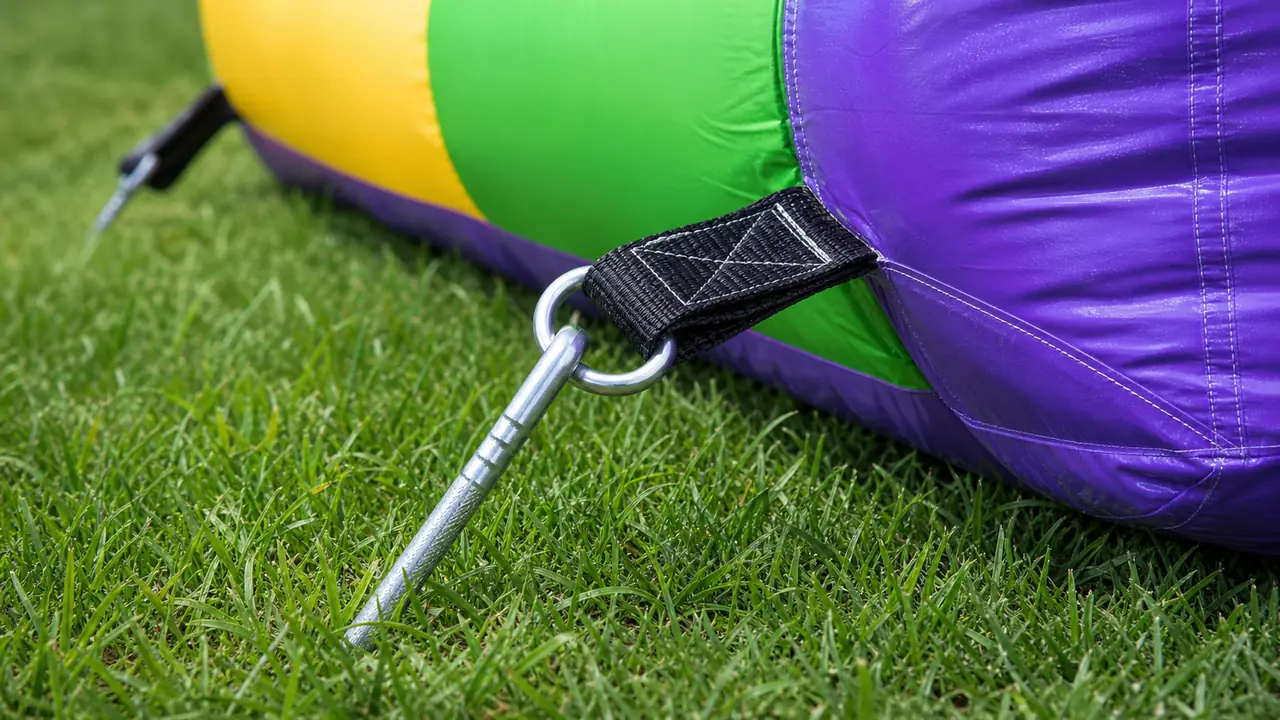
Anchoring deserves a special mention here because it's both the most-inspected item and the most operator-controlled one. A unit can be perfect on paper and still be dangerous if it's pegged down badly on site. If you're not confident on stake counts, ground types and wind limits, our breakdown of anchor systems for inflatables is worth reading before your next event.
Here's the part most buyers miss: the easiest inspection is the one you set up for at the point of purchase. When you're sourcing, the unit's "inspectability" matters as much as its design. Before you commit to an order, confirm the factory provides:
This is exactly why we document our units to EN14960 and ship them with the labelling and test paperwork your inspector will ask for. Whether you're after bouncers, slides or obstacle units, our full commercial inflatable games range is built for operators who have to clear an annual inspection every year, not just a one-time sale. Buyers focused on the classic hire market can browse our inflatable castles with the same documentation as standard.
In the UK and across much of Europe, an inflatable isn't legally hireable just because it was built well — it has to keep passing its RPII annual inspection. The smart move is to treat inspection readiness as a buying criterion: correct anchorage, durable PVC, permanent labelling and a complete test report. Sort that out at purchase, and every annual inspection after becomes a formality instead of a gamble. Source it cheap and undocumented, and you'll pay for it every single year.