
If you run a rental fleet or distribute inflatables into event markets, the inflatable disco dome is one of the highest-utilization SKUs you can stock. It sits in a different category from a plain bouncer, and buyers who understand that difference command a premium day-rate. This guide breaks down what a disco dome actually is, why it earns its keep, and what to specify when you place a factory order for export.
An inflatable disco dome is a fully enclosed, dome-roofed bounce house. Instead of open sides or the tall themed towers of a traditional castle, the play space sits under a single curved roof with mesh-netted walls on all sides. That enclosure is the whole point: it turns a jumping surface into a contained party room. Most units ship with integrated LED lighting strips and a controller, plus a housing for a sound or music system — typically a Bluetooth speaker — so the interior becomes a self-contained glow environment.
This is what separates a party bounce dome from the rest of the range. An open bouncer is a jump surface with low walls. A castle is a themed, turreted structure aimed at younger children. A disco bouncy castle, or dome, is built around ambience: dark interior, colored light, and music. Because it is an enclosed bounce dome, it also reads as an all-ages, all-weather product rather than a purely daytime kids' item.
The commercial case is straightforward. A LED disco dome opens up the teen and evening market that a standard bouncer cannot touch. Glow parties, tween birthdays, school events and evening festival bookings all favor an enclosed, lit unit. Operators consistently charge a higher day-rate for a dome than for an equivalent-footprint open bouncer, because the perceived experience is premium and the addressable age range is wider.
The dome roof also gives you weather cover, which reduces weather-related cancellations and protects bookings across shoulder seasons. That single feature can be the difference between a fulfilled booking and a refund on a gray afternoon. Combine broad age appeal, evening bookings and rain resistance and you get a high-utilization asset — the kind of SKU that pays back fast in a busy rental calendar and keeps working when the weather turns. For distributors, it is a natural upsell to operators already buying from your commercial inflatable games range, and it lifts the average order value on every fleet expansion.
A commercial disco dome is not a backyard product, and the build spec is where sourcing decisions are won or lost. Look for:
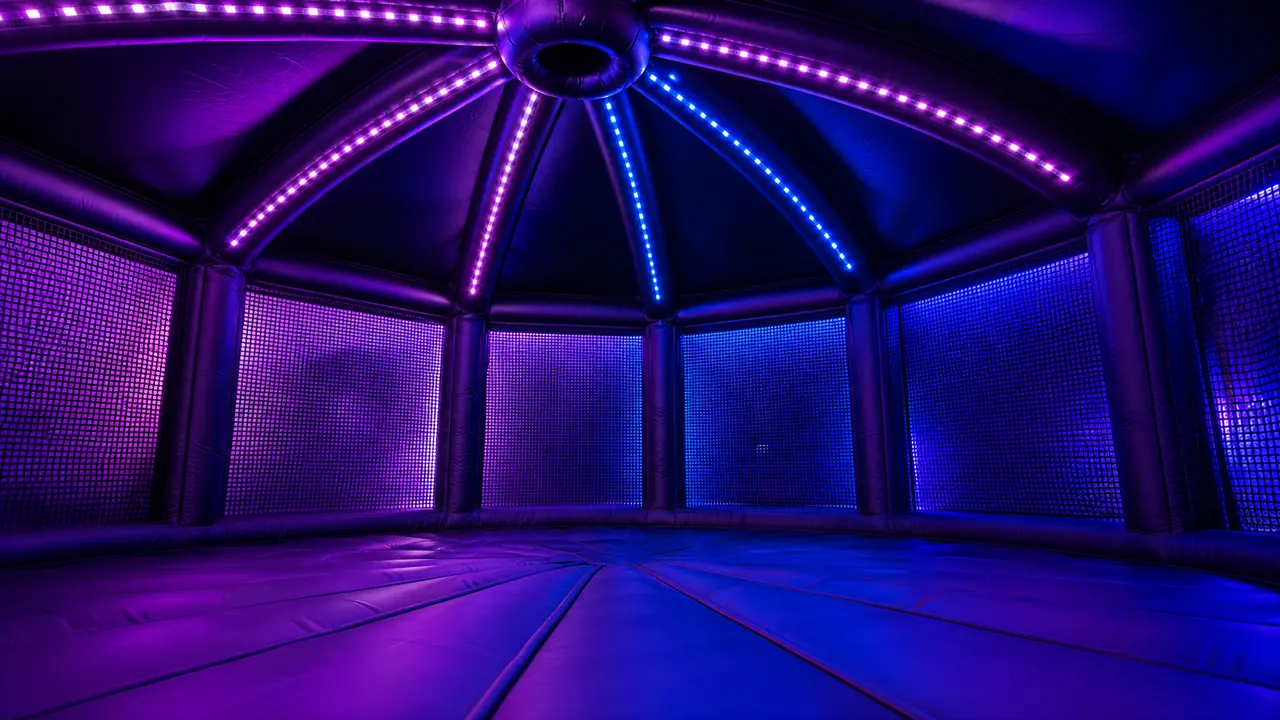
Because of the roof, a disco dome needs headroom clearance overhead — check the site ceiling or tree line before every indoor or covered booking. Anchoring follows the same discipline as any commercial inflatable: stake or ballast every anchor point to the manufacturer's instructions. Unlike a bare bouncer, a dome also needs an electrical supply for the LED and sound systems, so plan power at the site. Supervision and user capacity must follow the manufacturer's rated values on the unit — never exceed the rider count or age guidance printed by the factory. Compared with open inflatable bouncers, the operating routine adds two steps: overhead clearance and power.
When you move from a sample to a container order, the variables that matter for export are MOQ, packed cube and customization. Domes fold down reasonably well, so work out how many units fit your container cube before committing to a size mix. On the OEM side, factories can typically customize dome dimensions, base colors, LED color themes and printed logos or branding for your market, so you can match a house style across a fleet or build a signature look for a distributor's territory. If you also carry themed play products, keep the dome distinct in your catalog from your inflatable castles so buyers understand they are different SKUs with different rental positioning.
Three products get confused with the dome, and clear positioning protects your margin:
Keep those lines clean in your catalog and your sales team can quote confidently. The disco dome is the enclosed, lit, music-ready unit that unlocks the teen and evening market — position it that way and it becomes one of the strongest performers in a rental fleet.