
A calm stretch of water in front of a resort, a marina slip beside a superyacht, or a quiet lake at a beach club — all of these become usable, revenue-generating space the moment you drop a large buoyant deck onto the surface. That is the job of an inflatable water cruiser or floating lounge platform: a stable, oversized floating deck that guests stand, sit, sunbathe, and board from. For B2B buyers sourcing factory-direct, understanding the three main platform types — and how they differ from bounce and obstacle products — is the difference between a smart purchase and an expensive mismatch.
A floating lounge platform is a large-surface flotation product designed for relaxation and access rather than play. Guests use it as a swim deck, a sunbathing raft, a boarding step between water and vessel, or a social gathering pad on open water. Unlike a pool toy, a commercial unit is engineered for continuous rotation of users, marine exposure, and secure anchoring. The category covers everything from a simple rollup mat to a rigid engineered deck, so the first decision is which construction suits your operation.
A floating water mat is built from closed-cell XPE or EVA foam laminated in layers. There is no inflation — the foam itself provides buoyancy, so the mat is ready the instant it is unrolled and cannot deflate or puncture flat. These mats roll up for storage, offer a soft cushioned walking surface, and are ideal for lakes, calm bays, and family-oriented resort waterfronts. The trade-off is bulk: foam takes volume, so shipping cube is higher per unit.
An inflatable floating dock uses drop-stitch construction — thousands of internal threads connecting the top and bottom skins. When inflated to high pressure, those threads hold the deck flat and rock-hard, giving a rigid, near-solid standing surface that supports concentrated loads far better than foam. The skin is typically reinforced 0.9mm PVC over a military-grade drop-stitch core. Drop-stitch docks deflate and roll down to a compact package, so container cube is dramatically lower than foam mats — a major advantage for export freight.
An inflatable floating island is a bigger footprint unit that combines a flotation platform with built-in seats, backrests, or loungers, sometimes with a shaded area or integrated cooler wells. It is the social centerpiece product — a place for a group to lounge together offshore. Islands are usually air-inflated tube construction rather than rigid drop-stitch, prioritizing comfort and capacity over a hard deck.
Material choice drives durability and price. Closed-cell XPE/EVA foam mats are maintenance-light and self-buoyant but bulky. Drop-stitch platforms deliver a rigid deck and compact packing but require a high-pressure pump and correct inflation. Commercial-grade skins use reinforced 0.9mm PVC or heavier for abrasion and UV resistance. Look for welded (not glued) seams, stainless or reinforced D-rings and anchor points around the perimeter, a non-slip textured top so wet feet stay planted, and connection points that let you link multiple modules into a larger continuous deck. These same airtight welding and material standards run across our airtight water play range.
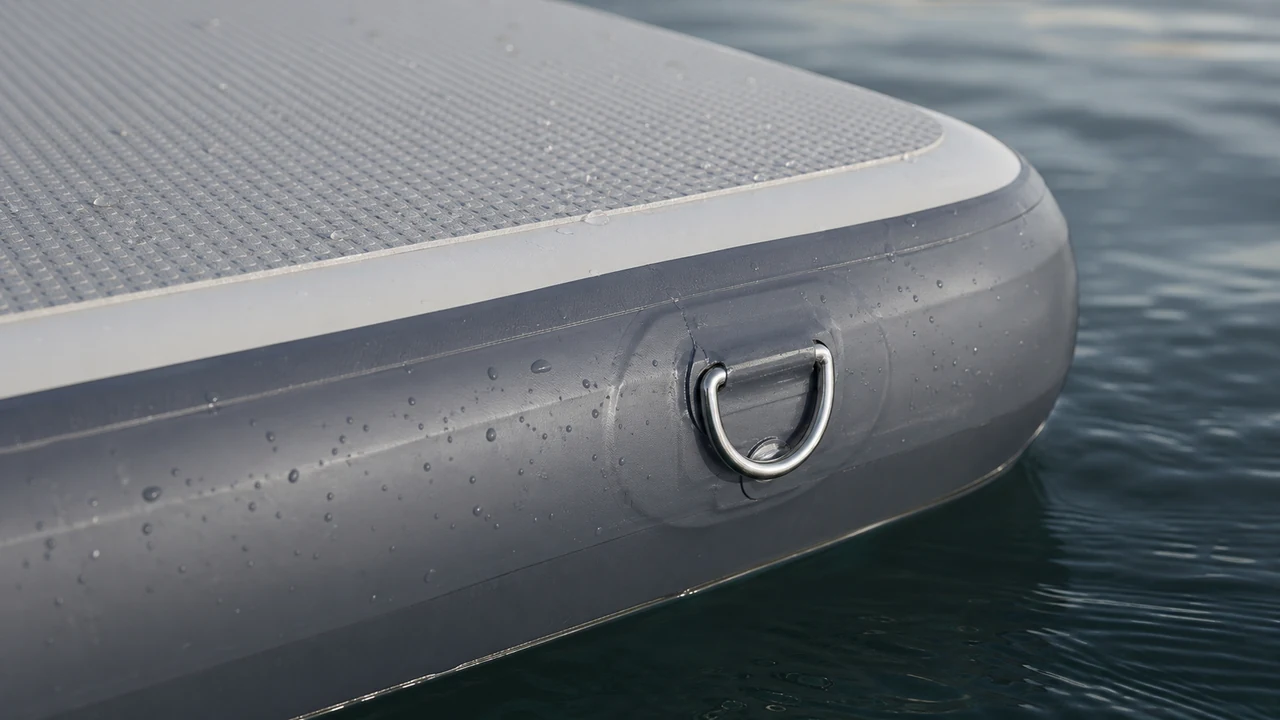
In open water, a floating platform must be securely anchored or moored so it cannot drift into vessels, swimmers, or shore. Correct anchoring also keeps the deck oriented and maintains freeboard — the height of the deck above the waterline — which affects how dry and stable the surface feels under load. Every unit carries a manufacturer-rated user capacity and maximum weight; operate strictly to those rated values and never exceed them. Do not guess capacity from surface area. For marine installations, specify UV- and salt-resistant materials and rinse hardware to slow corrosion. As with any water attraction, trained supervision and clear guest rules are non-negotiable for a commercial operation.
These platforms suit resort and beach-club waterfronts, marina and yacht inflatable platform setups where a superyacht needs a sea-pool or swim deck alongside, lake operations, and hotel lagoons. They pair naturally with other commercial water attractions to build a full on-water experience, and they complement fixed installations such as resort and hotel inflatable pools by extending usable space out onto open water.
Buyers often confuse three very different categories. A floating lounge platform is a relaxation and boarding deck — you stand or lie on it. That is not the same as an inflatable water trampoline, which is a springy bounce platform built for jumping, nor is it a connected obstacle course. If your goal is an active climb-and-slide circuit, look instead at aqua park modules. A cruiser or island is deliberately the calm, stable, lounge-first option in the lineup.
For export orders, plan around container cube first. Foam floating water mats are bulky and eat volume, while drop-stitch docks and islands pack compact — a real freight saving on FOB and CIF terms. Confirm MOQ per model, and take advantage of OEM options: custom colors, logo branding, and made-to-order platform sizes and shapes to match your waterfront layout. A well-specified commercial floating platform turns idle water into premium guest space, and the ROI comes from higher dwell time, added service points, and a differentiated waterfront — not from the sticker line on an invoice.