
Inflatable accessories and spare parts are the low-cost components — blowers, anchors, patches, glue, valves, nets, straps and storage bags — that keep a commercial inflatable inflated, anchored, repaired and rentable. They rarely appear on a purchase order until something fails on-site. That is the mistake. A single missing blower or torn net can idle a high-value attraction for an entire weekend, and idle units do not earn. For rental operators, distributors and FEC buyers, the spare-parts layer is the cheapest lever you have on fleet uptime and ROI.
This guide organizes the ecosystem by function: keep it inflated, keep it anchored, keep it repaired, keep it stored, and keep it branded. Order the right spares alongside the original unit, consolidate them into the same container, and specify them under one OEM/ODM program.
The blower is the single most critical accessory — no airflow, no attraction. Match blower power to unit size: small bouncers run on a 0.75 kW (1 HP) blower, mid-size combos on 1.1–1.5 kW (1.5–2 HP), and large slides or obstacle courses on 2.2 kW (3 HP) or dual-blower setups. Always specify voltage and plug type per destination market (220–240V / 50Hz for most export regions, 110V / 60Hz where required).
Every fleet should carry blower spares. A backup blower per 8–10 units is a practical ratio; the freight cost of one extra unit is trivial against a cancelled booking. Beyond whole blowers, stock the wear items — capacitors, thermal cut-outs, carbon brushes and mesh air filters. For sizing logic across the range, see our commercial blower selection guide before you finalize quantities.
Electric inflation pumps matter for sealed-air products — air-tight tents, water toys and constant-tension items that do not run a continuous blower. And the valve is the quiet failure point: Boston valves, high-flow deflation valves and screw valves each behave differently under load, and a mismatched or worn valve leaks pressure all day. Our breakdown of inflatable valve types and how they compare helps you spec the right replacement.
Anchoring is a safety-critical accessory category, not an afterthought — EN 14960 and common rental insurance both require every unit to be secured. Three systems cover nearly all deployments:
The interface between anchor and unit is the D-ring and safety strap. Reinforced D-rings stitched into a double-layer base, plus rated tie-down straps, are what actually transfer load. Order a full anchor kit per unit rather than piecing it together locally. For the trade-offs between systems, see our comparison of sandbag, water ballast and stake anchor systems.
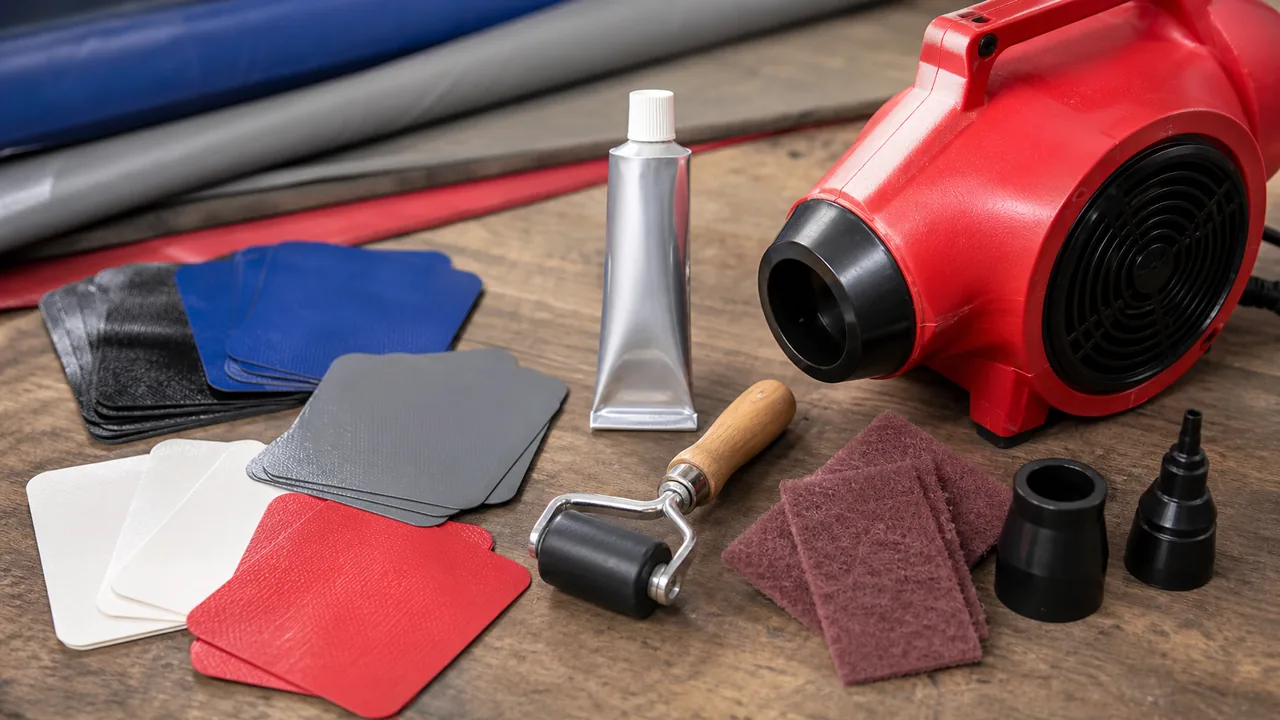
Commercial inflatables are built from 0.55mm and 0.9mm PVC tarpaulin, and even the best welds meet the occasional key, buckle or dragged zipper. A repair kit turns a multi-day RMA into a 20-minute fix on the truck. A complete kit contains color-matched PVC patch material, industrial PVC glue (solvent-based, not household adhesive), a seam roller, abrasive prep pads and a brush.
Stock patch material in your fleet's dominant colors so repairs stay invisible, and keep both small round patches for pinholes and larger sheets for seam tears. Buy the same 0.9mm PVC grade your units are made from so the patch flexes with the wall instead of peeling. Our step-by-step inflatable repair kits guide walks through technique and what to carry.
Safety netting on bouncers, jumps and slides is a wear part — UV and constant contact degrade it, and a sagging or torn net is an instant fail on inspection and an insurance liability. Replacement netting should match the original mesh gauge and the attachment method (sewn-in vs. clip-on). Spare zippers, buckles, hook-and-loop strips, tie-down ropes and mesh windows round out the consumables you will reorder most often.
Because these are the parts that fail during a busy season, they are exactly the items to over-order up front. A replacement net and a bag of buckles ship for almost nothing when they ride along in the original container.
Storage and transport accessories protect the asset between rentals. A heavy-duty storage bag — reinforced 600D or PVC-backed fabric with wide handles or wheels — lets crews move a folded unit without dragging PVC across gravel, the number-one cause of avoidable abrasion. Add compression straps, a folding tarp as a ground sheet, and clear labeling so the right blower ships with the right unit. Good storage gear directly extends service life, which is ROI by another name.
Branding accessories turn a generic unit into a marketing asset: Velcro-mounted banner panels, printed archway sleeves, removable logo patches and hook-and-loop attachment strips let operators re-skin a unit per client or event. Order these as part of an OEM/ODM program so mounting points are built into the unit from the factory rather than glued on later.
The full range — from blowers to banners — is available across our commercial inflatable accessories range, and most items support custom color, sizing and print under ODM.
The buyers who protect uptime best follow three rules:
A reliable inflatable spare parts supplier should quote the whole ecosystem, not just the headline attraction. Treat accessories as an uptime insurance policy priced in cents on the rental dollar: the unit earns because the cheap parts kept it standing.