Drop Stitch vs Traditional Airtight Inflatable Construction Guide
For technical buyers specifying inflatable docks, floating platforms, SUP boards, or aqua park modules, the choice between drop stitch (DWF — drop woven fabric) and traditional single-layer airtight PVC is not a styling preference. It is a structural engineering decision that determines whether your product behaves like a rigid panel underfoot or a soft balloon. This guide breaks down both construction methods at the engineering level so purchasing managers can specify the right build for each application.
1. What Drop Stitch Construction Actually Is
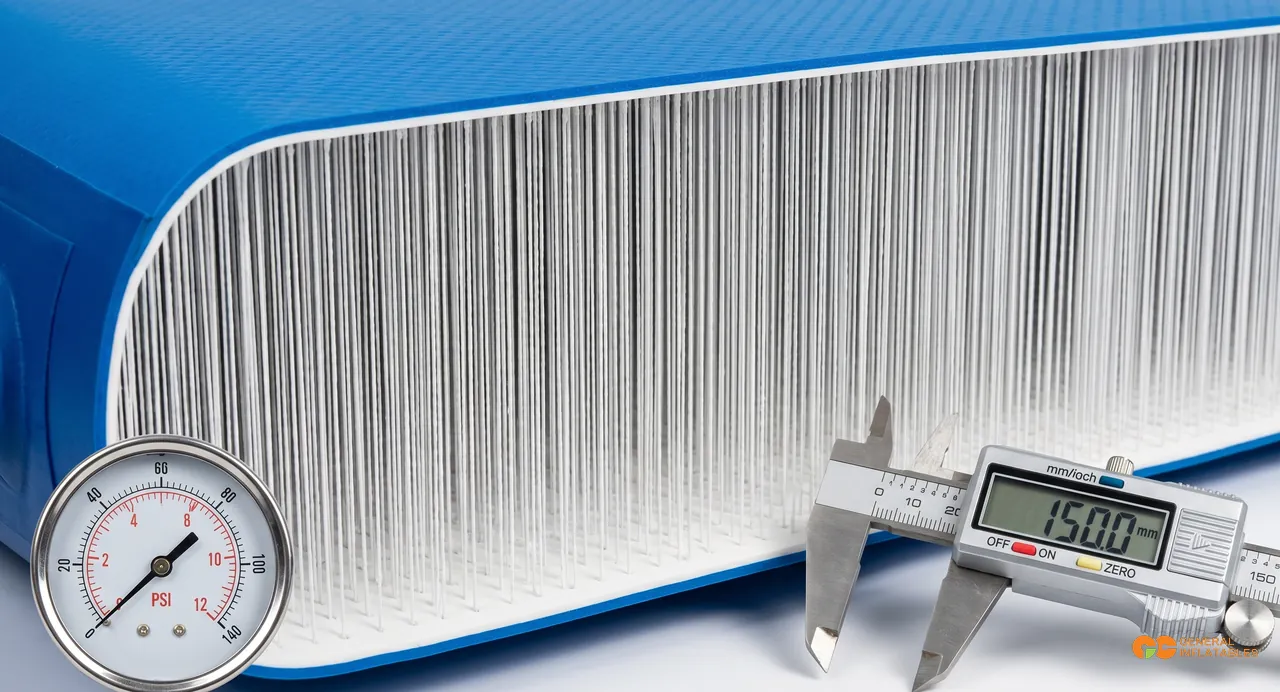
Drop stitch fabric is built from two parallel PVC sheets connected by tens of thousands of vertical polyester threads woven between the top and bottom layers. These threads — the "drop stitches" — are slack while the panel is deflated. Once inflated to high pressure (typically 8–15 PSI, or roughly 55–100 kPa), the threads pull taut simultaneously, forcing the two PVC skins into perfectly parallel planes and locking the assembly into a rigid, flat structure.
Traditional airtight PVC, by contrast, is a single-skin chamber that holds 0.05–0.2 PSI (3.5–14 kPa). Without internal tension members, the inflated shape is governed only by stretched membrane mechanics — it remains soft, bouncy, and deflects easily under point loads. The practical difference is dramatic: a drop stitch panel behaves like a stiff composite board, while a traditional airtight chamber behaves like a balloon.
2. Pressure Specifications That Matter
Operating pressure is the single most important number on the spec sheet, because it defines what the structure can support without deformation. We typically categorize commercial drop stitch into three grades, and any serious airtight water play product line will publish PSI ratings on every SKU:
- Standard drop stitch: 8–12 PSI operating pressure, 1000D PVC top and bottom layers. Suitable for indoor mats, light platforms, and entry-level floating products.
- Marine-grade drop stitch: 12–15 PSI, 1100D–1500D PVC. Standard for inflatable docks and SUP boards exposed to UV and saltwater.
- Heavy-duty drop stitch: 15–20 PSI, reinforced reinforcement bands. Used for inflatable boats, rescue craft, and load-rated commercial platforms.
Traditional sealed airtight products top out around 0.5 PSI before seam stress becomes a failure risk. That is roughly 30× lower than even the cheapest drop stitch grade. For any application where users stand, walk, or transfer point loads, low-pressure construction is not a cost-saving alternative — it is the wrong product category entirely.
3. Strength Comparison: Real Numbers
Two metrics determine real-world performance: uniform load capacity (kg/m² spread across the panel) and point-load tolerance (a rigid object pressing on a small area).
| Construction |
Operating Pressure |
Uniform Load Capacity |
Point Load Behavior |
| Drop stitch, standard |
10 PSI |
~450 kg/m² |
Distributes load across stitch matrix; no permanent deformation up to spec |
| Drop stitch, marine-grade |
15 PSI |
~700 kg/m² |
Excellent; rigid surface even under concentrated foot traffic |
| Traditional airtight PVC |
0.1–0.3 PSI |
~80–120 kg/m² |
Localized deformation; slow leak risk if loaded by a sharp/heavy point |
The point-load behavior matters most for buyers who underestimate site conditions. A spectator stepping onto a low-pressure platform with a stiletto heel, or equipment dropped from a boat onto a dock surface, will damage traditional construction long before the same event affects a drop stitch panel.
4. Applications: Where Each Type Wins
Drop stitch is the right choice for:
- Inflatable docks and floating piers — users expect a rigid walking surface
- SUP (stand-up paddle) boards — board flex destroys paddling efficiency
- Pool tracks and traverse platforms where users stand and move
- Aqua park jumping platforms, slide top decks, and standing zones — including the structural cores inside many modular water park components
- Mobile event flooring, inflatable stages, fashion runways, and trade-show podiums
Traditional airtight wins for:
- Bouncing surfaces — softness IS the feature, not a defect
- Sealed water containment such as inflatable pool walls, where load is hydrostatic rather than human; many commercial airtight pools use this construction precisely because rigidity would be over-engineered
- Climbing structures, where some deformation aids grip and absorbs impact
- Budget-sensitive use cases — traditional construction costs 50–70% less per m²
If you want a deeper explanation of how airtight chambers achieve their seal and pressure stability, see our reference on airtight inflatable construction fundamentals, which covers the welding methods that both single-skin and drop stitch products rely on at their seams.
5. Lifecycle and Maintenance Differences
- Service life: drop stitch typically lasts 8–12 years under commercial use with proper care; traditional airtight products usually run 5–8 years before re-seaming or replacement.
- UV resistance: comparable between the two — UV behavior depends on PVC grade and lacquer treatment, not on the stitch architecture. For grade selection guidance, see our breakdown on PVC tarpaulin grade selection.
- Field repair: small punctures under 2 cm are patched similarly on both. Seam failures on drop stitch are more involved because the technician must work around the internal stitch matrix.
- Stitch separation: rare in quality-built panels and not field-repairable. A separated stitch zone requires factory rebuild — this is why stitch density and PVC bond quality at the factory matter enormously.
- Storage: drop stitch panels can be rolled with about 1 PSI residual pressure to protect seam memory; traditional airtight products fully deflate and fold.
6. Cost Trade-off Framework
Drop stitch construction costs 2–3× per m² compared to traditional airtight PVC. That premium is significant on large platforms, so buyers reasonably ask whether they can specify down. The framework we apply with engineering clients:
- If your use case requires structural rigidity (walking, standing, equipment loads, paddleboarding), no traditional airtight product satisfies the requirement. Drop stitch is not optional — it is the only correct category.
- If your use case is a bouncing or play surface (kids jumping, climbing, splashing), traditional airtight is the correct specification and drop stitch is over-engineered. You will pay 2–3× for performance the application does not need.
- Hybrid products exist: a drop stitch base provides rigid support, while a traditional airtight chamber sits on top for the play surface. This combination is common in modern aqua park modules and lets you spend the premium only where it produces value.
Lifecycle math usually justifies the drop stitch premium for any product touched by paying customers. A 10-year drop stitch dock replacing two cycles of traditional construction over the same period costs less per operating year — and avoids the customer experience cost of a deflecting walking surface.
7. Buyer Spec Checklist for Drop Stitch Products
When evaluating quotes from suppliers, work through this checklist line by line. Any "yes — but not on the spec sheet" answer is a red flag.
- Operating pressure: confirm the PSI rating matches your use case. SUP boards and docks should be 12+ PSI minimum.
- PVC layer denier: 1000D is the floor for commercial use. 1100D–1500D for marine and heavy-duty.
- Stitch density: modern factories produce 6000–8000 stitches per m². Lower density means more bulging between threads under pressure.
- Pump compatibility: drop stitch requires a high-pressure pump rated to 12–20 PSI. Standard low-pressure blowers used for bouncers will not inflate a drop stitch panel correctly.
- Edge seam type: welded (RF or hot-air) seams are mandatory for high-pressure use. Glued-only edges fail predictably under sustained pressure cycling.
- Pressure gauge: a calibrated gauge must ship with every unit. Under-inflation causes immediate floor deflection; over-inflation stresses seams.
- Stitch density spec sheet: ask suppliers to document stitch count, PVC denier, and pressure rating in writing. Reputable factories publish these without hesitation.
Treat any of these items as a deal-breaker if a supplier refuses to specify them. Drop stitch is a high-precision construction method, and the entire value proposition collapses if any of the seven items are skipped or under-built.
Designing for structural rigidity? Specify drop stitch upfront.
We build drop stitch products in marine-grade 1100-1500D PVC with stitch density spec sheets and high-pressure pumps included in every quote. Browse our complete water park systems and request a drop-stitch specification quote.
For related buying considerations, see our 2026 industry trends overview.
Planning to buy inflatables for your rental business or event?