
An inflatable funland is the biggest single play unit most rental operators and family entertainment centers (FECs) will ever buy. It packs bouncing, climbing, slides, and obstacles into one footprint — a high day-rate, high-throughput anchor attraction. This guide covers how to size, theme, and spec one to match your venue.
A funland — also sold as a fun city, funcity, or big inflatable playground — is a large multi-activity play zone built as a single connected unit rather than a cluster of separate inflatables. Where a standard bouncer gives you one activity, a funland combines three to six in a continuous loop kids move through: jump area, climbing wall, tunnel crawl, slide exit, and obstacle pop-ups. Think of it as the difference between a single inflatable castle and a full play park under one roof of PVC.
The commercial appeal is simple: one unit, one setup crew, one blower bank, but the footprint and rental value of what would otherwise be four or five separate products. That is why funlands command premium day-rates and anchor the floor of indoor playground operators.
A well-designed funland is a circuit, not a pile of features. The standard activity menu includes:
For commercial use, insist on a 0.55 mm PVC tarpaulin minimum on the floor and high-wear panels, double- or quad-stitched seams, and reinforced anchor patches at every D-ring.
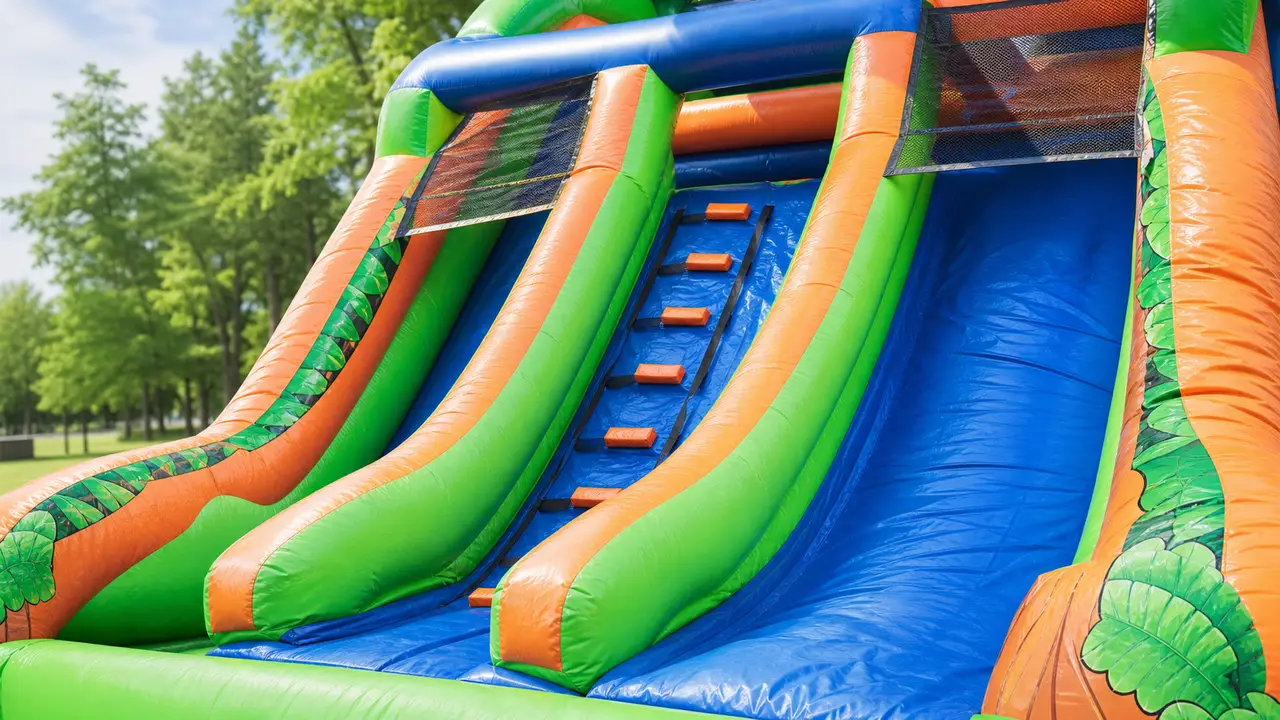
Funlands are sold by footprint and activity count. The biggest ordering mistake is buying a unit that won't physically fit the venue once you add the safety perimeter. Always plan for a clear safety margin of at least 1 m around the inflatable plus the blower clearance and the slide runout zone.
| Class | Footprint | Activities | Capacity (kids at once) | Best venue fit |
|---|---|---|---|---|
| Small funland | ~8 x 6 m (26 x 20 ft) | 3–4 (bounce, climb, single slide) | 10–15 | Small backyards, school fairs, mobile rental |
| Medium funland | ~10 x 8 m (33 x 26 ft) | 4–5 (bounce, climb, dual slide, obstacles) | 15–25 | FEC floor, mid-size events, parks |
| Large funland | ~15 x 10 m (49 x 33 ft) and up | 6+ (full circuit, multiple slides, tunnels) | 25–40 | Indoor playgrounds, resorts, festival anchors |
For indoor venues, check ceiling height as carefully as floor area — a large funland slide tower can stand 4–5 m tall, and you need working clearance above that for the inflated peak and air movement.
The use case changes the construction, not just the size. Outdoor funlands need UV-stable PVC, heavier ground anchoring (stakes plus sandbags), and proper drainage channels so rain doesn't pool on the bounce floor. Wind rating matters: most commercial units are rated to operate up to roughly 38 km/h (24 mph) and must be evacuated and deflated above that.
Indoor units skip the stakes (you anchor to ballast or floor points) but carry one non-negotiable requirement most buyers underestimate: fire rating. An outdoor-spec unit moved indoors without the right certified material will fail an FEC inspection.
Theme drives repeat footfall and per-head spend. Funlands are the most customizable product in the catalog because the large surface area is a canvas. Common routes:
For export buyers, confirm whether custom artwork affects MOQ and lead time before quoting your own clients. Stock-theme units typically ship FOB on much shorter timelines than full-custom builds.
Capacity is not one number — it's a function of footprint, age band, and supervision. EN 14960 ties maximum users to the available activity area and user height range. As a working rule, plan for roughly 1.5–2 m² of active bounce area per child, and post separate limits by age (under-6 and 6–12 should not share peak slots on the same unit).
Throughput — how many kids cycle through per hour — is the metric that actually drives revenue. A funland circuit moves children continuously (in at the climb, out at the slide), so a medium unit can turn over far more guests per hour than its static capacity suggests. That circulation is what justifies the day-rate.
Any funland destined for an indoor playground or FEC must use certified flame-retardant PVC. The standards buyers should require depend on market: B1 (DIN 4102, common in Europe and the Middle East) and NFPA 701 (North America). EN 14960 covers the inflatable's structural and operational safety but does not itself guarantee fire performance — that's a separate material certification you must specify on the PO. Get the test certificate in writing before shipment; retrofitting is impossible. Our full breakdown of fire retardancy standards for indoor venues walks through which cert applies to which market.
A funland is a fleet anchor, not a volume product. It earns a premium day-rate, but it also ties up more transport, storage, and setup labor than three small bouncers combined. The math works when your bookings reliably fill a large unit — multi-day festivals, FEC fixed installs, resort seasons. For mobile rental operators, one funland plus a stable of smaller units usually beats two funlands. Run the numbers using our framework on inflatable rental fleet ROI before committing.
Key ROI levers: setup time (a 2-person crew should rig a medium unit in 30–45 minutes), transport volume (deflated and bagged weight), blower count (each adds power draw and a failure point), and durability of the high-wear floor.
Put these on the purchase order to avoid surprises:
Browse layouts, themes, and sizes in our Inflatable Funland category to match a unit to your venue and fleet.