
Choosing commercial Halloween inflatables starts with the job each unit must do. A display figure attracts attention; a bounce-and-slide unit supports a play session; a walk-through haunted house creates a separate visitor experience. They require different space, operating arrangements and procurement information, even when they share the same Halloween artwork.
For rental companies, shopping centres and event suppliers, the useful buying question is which format fits confirmed bookings and can be delivered, checked and prepared before use. This guide provides a selection table, an order-planning framework and the information to include in a supplier enquiry. It does not assume that a seasonal design will achieve a particular rental rate or payback period.
Use the commercial Halloween range to shortlist formats, then compare the specification of each actual model. Similar-looking products can differ in access, power requirements, packed size and intended use.
| Format | Purpose | Information to confirm before ordering |
|---|---|---|
| Display figure | A visual feature at an entrance or retail display | Installed dimensions, viewing position, power, fixing arrangements and separation from public access; do not assume it is designed for climbing or play. |
| Bouncer or slide combo | An actively supervised play attraction | Model-specific user limits, entry and exit arrangement, complete operating footprint, blower specification and operating instructions. |
| Walk-through haunted house | A themed visitor route | Layout, visibility, exits, accessibility information, staffing arrangements and documented operating limits. |
| Entrance arch | Marking an event entrance or route | Clear opening, overall dimensions, fixing positions, power and how the installation interacts with pedestrian access. |
Do not select by the product's external width alone. Ask for a drawing showing the installed structure and the additional space required by its instructions. Compare that drawing with the venue plan, including surrounding access and service areas. A themed attraction that physically fits may still be unsuitable for the intended operation.
If a haunted house is on the shortlist, use the haunted-house buying guide for the layout questions specific to that format. The purchase list should distinguish a decorative haunted-house shape from a structure intended for visitors to enter.
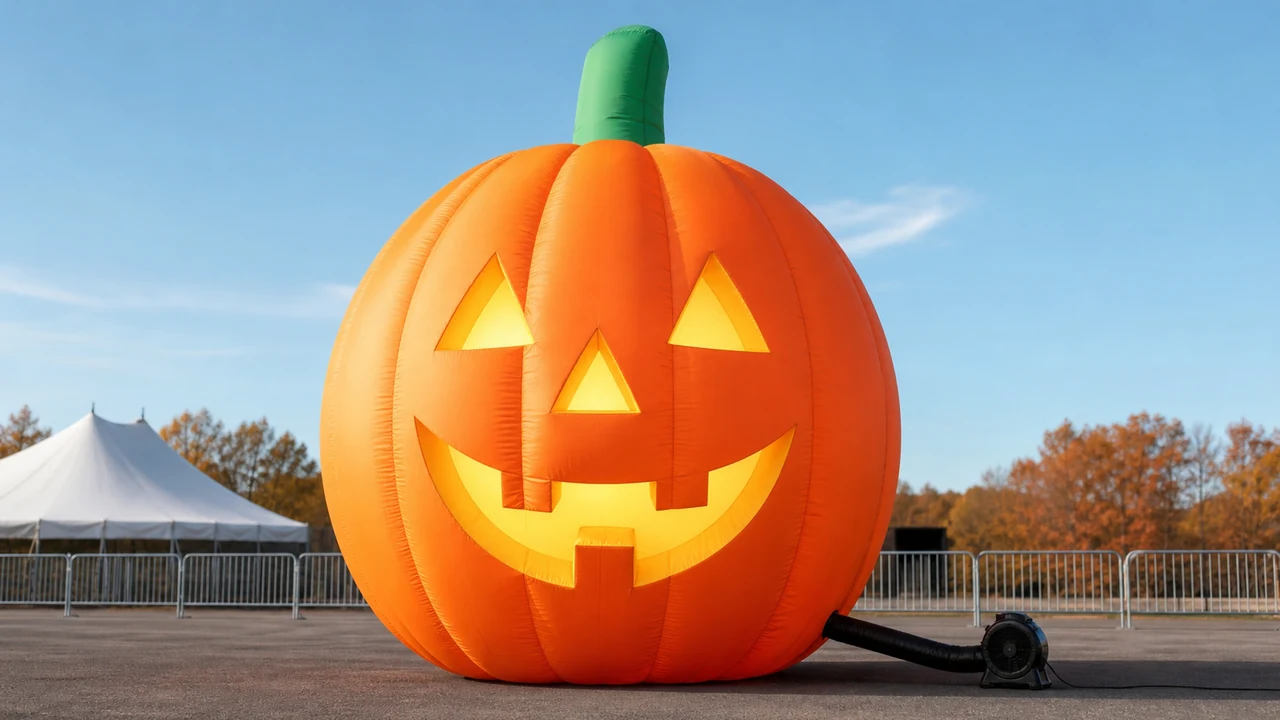
For an event approaching this October, start by asking whether an exact unit is available and where it is located. Obtain a written dispatch date and a delivery estimate for your destination. A catalogue listing, a stock photograph or an unconfirmed freight estimate does not establish availability. Leave time after arrival for the checks and preparation required before the first booking.
For made-to-order or OEM Halloween inflatables, work backwards from the date the equipment must be ready for use. Include artwork approval, production, inspection, international transport, customs clearance, local delivery and arrival checks. Request dates for your order rather than treating a general production range as a promise.
The production lead-time guide explains production planning, while the seasonal purchasing calendar puts Halloween alongside other seasonal orders. If the confirmed schedule cannot support this year's event, evaluate available alternatives or plan the custom unit for the following season. Faster freight cannot remove unfinished production or approval work.
Send every shortlisted supplier the same requirements. Include the destination, required ready-for-use date, intended application, available site dimensions, indoor or outdoor location, supply electricity details, preferred model and quantity. Attach the venue plan and artwork brief where relevant.
Ask the quotation to identify the exact model, material specification, finished dimensions, packed dimensions and weight, included accessories, supply method, artwork scope and shipping terms. List blowers, fixing equipment, storage bags and repair materials separately so that missing items are visible. Confirm who provides installation and operating information in the language the receiving team needs.
For Italy, Germany and France, use the terminology buyers recognise, such as gonfiabili Halloween, Halloween-Hüpfburgen and châteaux gonflables Halloween, but attach the actual model drawing. A translated product name alone does not establish the same specification, permitted use or documentation requirements.
Ask the venue which documents it needs for the proposed use, and have the supplier identify which documents relate to the quoted model. Keep material test information, product operating instructions, electrical equipment documentation and any venue approval requests distinguishable. Do not treat a material test report as blanket approval for an assembled attraction.
Where a requirement is unclear, resolve it with the venue and the relevant qualified adviser before confirming the specification. Avoid ordering a play attraction under a display-only description or assuming that documents supplied for a different unit cover the chosen model.
Compare the expected contribution from confirmed and reasonably forecast bookings with the complete cost of ownership. Your worksheet should include landed equipment cost, transport to events, setup and supervision, cleaning, inspection, repairs and storage. Record assumptions separately from actual booking results.
Use more than one booking scenario and show how unbooked dates, cancellations or higher handling costs affect the result. Display installations and rental play equipment earn revenue differently, so avoid assigning one generic payback period to both. Any plan to refresh artwork or reuse a structure for another holiday should be confirmed as an available option for that model.
Reserve a suitable storage area and follow the manufacturer's drying, packing and inspection instructions. The off-season storage guide supports that planning. Record the unit's condition, missing accessories and booking performance when it returns from use; those records are more useful for the next order than an assumed service life.
For a focused quotation, send the chosen format, venue dimensions, destination and required ready-for-use date together. Ask the supplier to confirm both the equipment specification and the schedule before you commit the unit to an event.