
Resort-scale inflatable water parks and campsite-scale ones are not the same business. A hotel installs a 20-module layout once and runs it with dedicated aquatics staff for six months straight. A campground or small Freizeitpark is working with a smaller footprint, a seasonal crew that also covers reception and the snack bar, and a shorter window each morning to get the water surface guest-ready. This guide covers what actually keeps a modular inflatable water park profitable at that scale: sizing, the daily maintenance SOP, seasonal open/close protocol, staffing math, and where the payback period realistically lands.
Most campsite operators start with 4-8 modules rather than the 15-20+ module layouts common at resort installations — think a central floating obstacle line plus 2-3 slide/climb combos, sized for a 15m x 20m to 25m x 30m water surface. That range covers a typical 150-400 guest/day campsite without the crew and filtration overhead of a full aqua park. Module packages built for this scale are listed under Water Park Modules, and pre-configured layouts sit under Complete Water Parks if you'd rather start from a proven combination than assemble one module at a time.
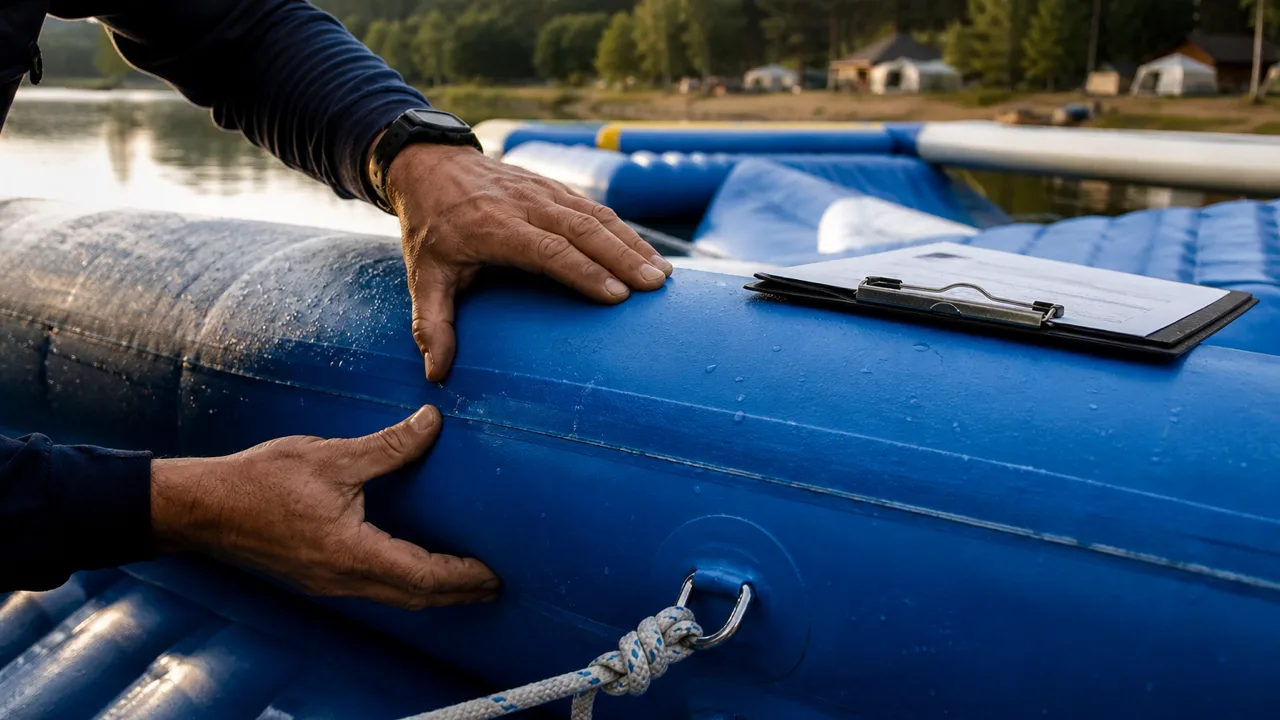
Before gates open, run the same three checks every day regardless of how busy yesterday was:
Full turnover, chemistry, and filtration schedules — including how the numbers change for a non-chlorinated pond-fill setup versus a filtered/recirculated one — are covered in depth in our water treatment and filtration guide. That article stays product-agnostic; this one focuses on what changes when you're running it with three seasonal staff instead of a dedicated aquatics team.
Camping and Freizeitpark installations in Central Europe typically run a defined season — commonly early May through mid-September — rather than year-round operation, which changes the maintenance math entirely:
EN 14960 guidance sets lifeguard-to-water-surface ratios that don't change based on your operation's size — a 300 sqm water surface needs the same supervision coverage whether it's staffed by a five-person aquatics team or by campsite staff rotating in from reception. The practical fix most camping operators use is cross-training: 2-3 staff certified for water supervision who also cover check-in or the site shop during off-peak hours, rather than carrying dedicated aquatics headcount through a short season. Build the cross-training schedule around your camping site's actual peak hours (typically 11:00-17:00), not a resort's all-day coverage assumption.
A 4-8 module layout carries meaningfully lower upfront cost and lower ongoing labor cost than a resort-scale installation, and campsite day-use or season-pass pricing generates steady incremental revenue on top of existing lodging income rather than needing to stand alone as a destination. Most camping operators we work with recoup a mid-size module package within one to two full operating seasons, largely because the equipment adds a paid amenity to guests who were already booking the site — it isn't competing for new traffic the way a standalone attraction has to. For operators evaluating a larger, resort-scale build instead, our 5-year TCO comparison for resort investors breaks down the larger-scale numbers side by side.
EN 14960 certification, CE marking, and the specific DACH regional installation requirements (ground anchoring, minimum clearance zones, mandatory signage) apply the same way to a campsite installation as to a resort one — smaller scale doesn't mean lighter compliance. Our German & DACH buyer's compliance guide covers the full certification checklist and installation sign-off process.
How much water surface do I need for a 200-guest/day campsite?
A 15m x 20m surface (300 sqm) with 5-6 modules comfortably handles 200 guests/day in rotating sessions, assuming staggered entry rather than all guests in the water simultaneously.
How long does a modular inflatable water park last with seasonal-only operation?
With proper close-season storage (dry, folded, off-ground), commercial-grade PVC modules typically hold up for 5-7 operating seasons before panel replacement is needed — meaningfully longer than year-round installations because the material isn't under constant UV and chlorine exposure.
Whether you're sizing a first module package for a mid-size campsite or adding a second layout to an existing Freizeitpark, our team can help match module counts to your actual daily guest flow rather than a generic resort template. Get in touch for a layout recommendation and lead-time estimate.