
“It is losing air” describes an observation, not its cause. Before looking for a puncture, identify whether the equipment is sealed or needs a blower throughout operation. The same observation can mean different things on those two constructions. A useful inflatable leak diagnosis starts with the model instructions and the circumstances in which the change appeared.
| Construction | What to establish first | What not to conclude |
|---|---|---|
| Sealed / airtight | Which chamber is affected, how it is inflated and closed, and the manufacturer’s pressure and temperature instructions. | Softness alone does not identify a leak or justify adding more air. |
| Constant-air / continuously blown | Whether the specified blower must run continuously, and the documented arrangement of air inlets and deflation openings. | Air escaping through sewn construction is not, by itself, evidence of a defect. |
Use the product documentation rather than the catalogue category name to identify the construction. If an attraction has several chambers or combines components, record which part is affected. Do not apply a sealed-chamber pressure-hold test to a continuously blown structure. For blower compatibility and daily operating pressure checks, use the separate air pressure and blower-output guide.
Record the model and unit ID, affected area, time observed, ambient conditions and the setup in use. For a sealed unit, include pressure readings only where taken using the specified method and suitable equipment. For a constant-air unit, note whether the blower arrangement or an opening has changed, without treating that observation as permission to adjust the setup outside its instructions.
For sealed air, temperature changes can affect pressure. A cooler morning can therefore complicate an overnight comparison, but temperature is not proof that the unit is sound. Compare observations under the conditions required by the manufacturer, and keep unexplained changes unresolved until assessed. Do not raise pressure to compensate for softness without checking the instructions.
| Observation | Information to check | Next step |
|---|---|---|
| A sealed chamber becomes softer after a temperature change | Temperature and any valid pressure record; chamber and closure identity. | Check the prescribed assessment conditions before attributing the change to leakage. |
| An isolated point away from a seam appears damaged | Exact location, visible abrasion or puncture, and any approved leak-check result. | Record a suspected panel leak; do not infer the cause or repair method from location alone. |
| A welded joint shows separation or a repeated leak indication | Whether the indication follows the joint and whether adjacent material is affected. | Treat as a suspected joint problem for assessment; do not assume a patch will resolve it. |
| An indication appears around a valve or fitting | Whether it is at the closure, housing or surrounding fabric. | Record the location and fitting identity without dismantling a pressurised assembly. |
| Air is heard near a zipper or opening | Whether this is an intended deflation opening and how its cover or closure should be arranged. | Check the documented closure arrangement; sound alone does not establish zipper failure. |
| A constant-air unit loses shape or firmness | Blower/setup observations, opening status and visible damage. | Take the unit out of use under the operating procedure and arrange assessment; do not default to a sealed-unit leak test. |
The table is a triage record, not a return-to-service checklist. More than one issue may be present. A change in airflow, an open deflation port and material damage can coexist; one visible finding does not explain every symptom.
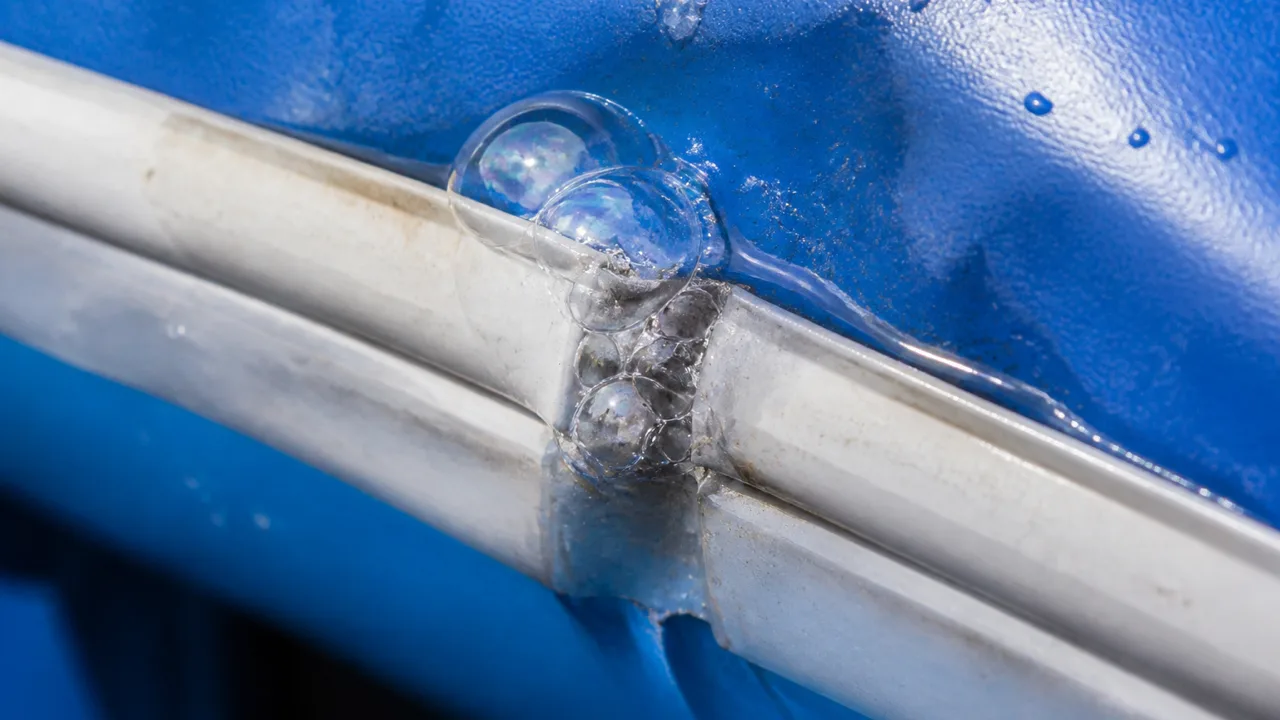
Where the manufacturer permits a compatible leak-detection solution on an airtight chamber, a local bubble indication can help identify where air is escaping. Follow the specified preparation, access and cleaning instructions. Do not choose a chemical or test pressure from a generic online recipe, immerse electrical equipment, or inflate beyond the specified condition to make a symptom more visible.
Distinguish an indication along a welded joint from one at an isolated panel point. Around a valve, note whether it appears at the closure or where the fitting meets the fabric. These are observations for the technician, not a conclusion that every valve can be replaced or every seam can be patched. The valve types guide explains the hardware distinctions without turning this diagnosis into a parts-selection exercise.
For sewn constant-air structures, expected air escape can make a bubble-based interpretation misleading. Follow the model’s inspection process and have unexplained loss of shape assessed. Do not plug seams, seal intended outlets or stop the blower as a diagnostic shortcut.
Give the assessor the equipment identity, affected chamber or area, timeline, conditions and labelled photographs. Separate “observed at the valve housing” from “valve failure confirmed”. Record any earlier repairs or changes and identify anything that remains untested. Do not operate equipment with an unresolved defect to obtain a demonstration video.
Once the issue has been assessed, the repair kit guide and repair versus replace decision guide cover their separate next steps. A repaired unit still needs the applicable checks before returning to service. Equipment categories such as airtight pools and water park modules help identify the product family; obtain the instructions for the actual model rather than using the category name as a test specification.
No. A constant-air structure can release air through its sewn construction as part of its design. Check its instructions and investigate abnormal shape or performance rather than treating all air escape as a fault.
Do not assume so. Check the manufacturer’s pressure and temperature instructions and investigate the change. Adding air without that check can create a different problem.
No. A permitted bubble check can help locate air escape, but construction, damage and the manufacturer’s repair requirements determine the next action. Record the finding and obtain an assessment.
Planning to buy inflatables for your rental business or event?