
A flat per-hour rental rate leaves money on the table for most party-focused operators — packaged pricing tiers and an age-appropriate fleet mix consistently outperform a single generic rate card. This is how to structure both.
A flat hourly rate forces every customer into the same mental math ("is this worth $X/hour"), while a tiered package (Basic, Standard, Premium, for example) lets customers self-select based on budget and event size without you having to negotiate each booking individually. Packages also make upselling structural rather than awkward — a customer choosing between Standard and Premium is comparing value, not being pitched an add-on mid-conversation.
A workable three-tier structure: a Basic tier (single bounce unit, standard delivery window, self-serve setup instructions) for budget-conscious smaller gatherings; a Standard tier (bounce unit plus one accessory like a concession machine or small obstacle add-on, attended delivery) for the median birthday party; and a Premium tier (combo unit or themed unit, extended rental window, priority delivery slot, and staffed setup/breakdown) for larger events willing to pay for convenience. Price the gap between tiers to make Standard the obvious middle choice — most customers gravitate to the middle option when three tiers are presented clearly.
Toddler-focused units (ball pits, low-height soft play, gentle slides) serve the 1-4 age range where safety margin matters more than excitement; standard bounce castles and combo units serve the broad 5-10 range that makes up most birthday party bookings; and larger units (bigger slides, obstacle elements, interactive games) serve the 10+ range and mixed-age family events where teenagers and adults also participate. A fleet weighted too heavily toward one age bracket turns away bookings outside that range — the goal is enough range to say yes to most inquiries without carrying units that sit idle most of the season. Our castle buyer's guide covering theme selection and sizing is a useful reference once you've settled on how many units belong in each age bracket.
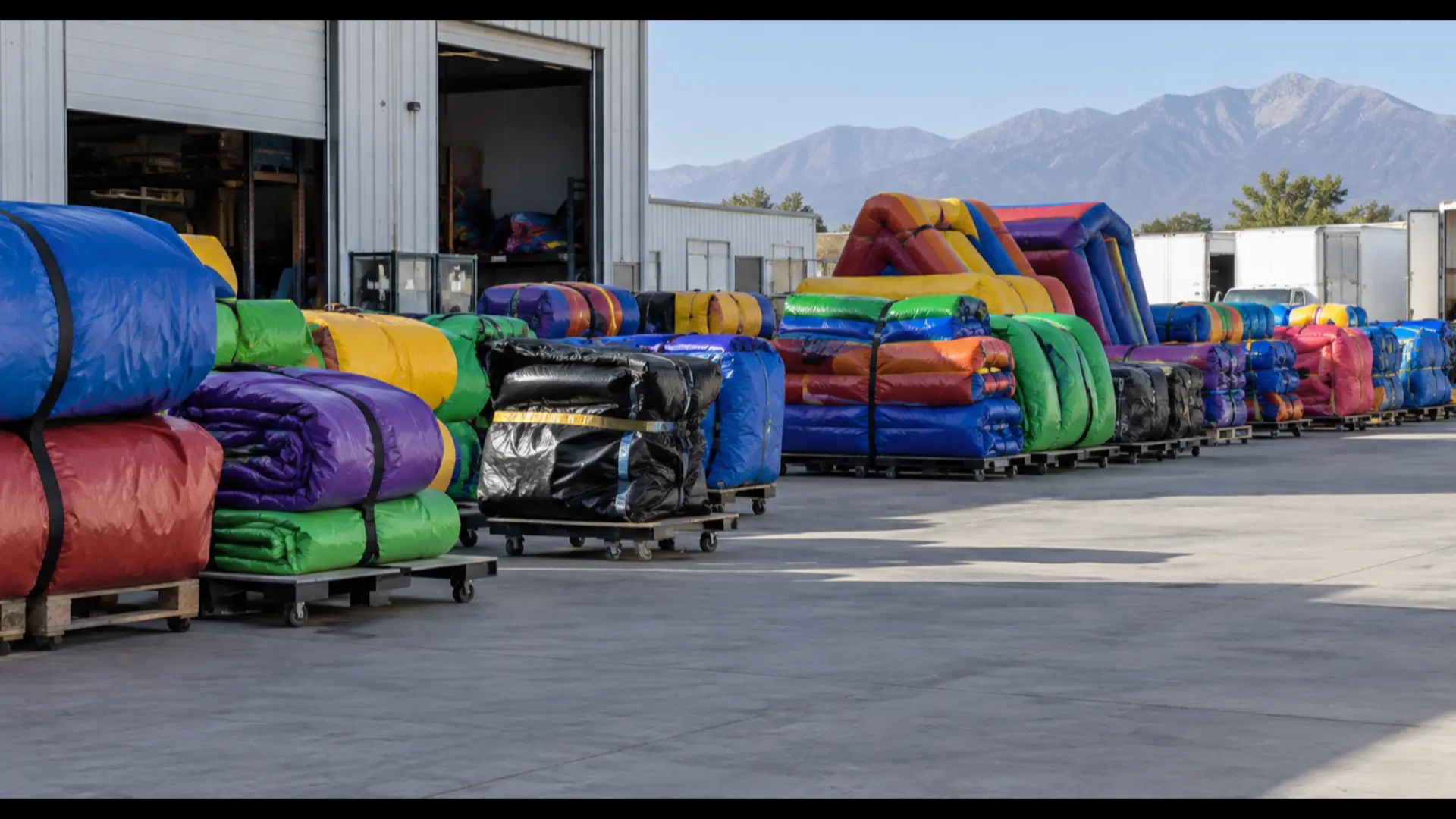
A new operator building an initial fleet should weight toward the 5-10 age bracket, since it covers the largest share of birthday party bookings and the units themselves (standard bounce castles, small combos) have the broadest resale and repurposing flexibility if you need to adjust your mix later. Add toddler-specific and teen/mixed-age units incrementally as booking data shows demand, rather than guessing at the full range on a first order — our MOQ reality check by category covers realistic minimums for testing a new age-bracket category without overcommitting.
Indoor-friendly packages (soft play, smaller combo units) should get pricing and marketing priority during colder months when outdoor bounce houses see fewer bookings, while summer packages can lean into water-compatible units and longer rental windows tied to school-break scheduling. Building this seasonal shift into your package menu ahead of time, rather than reacting to a slow month, keeps utilization more even across the year. Winter-specific strategy is its own topic worth planning around separately from just swapping which units you promote each season.
Concession add-ons (popcorn, cotton candy, snow cone machines) work well bundled into higher tiers since their marginal cost is low relative to the perceived value they add. Staffing add-ons (a dedicated attendant for the full event rather than drop-off-only service) are better kept à la carte or reserved for the Premium tier specifically, since the cost scales with event length in a way that's harder to average into a flat package price without either overcharging short events or undercharging long ones.
Package tiers are a customer-facing pricing structure, separate from your own fleet-acquisition math of whether to expand inventory through purchase versus relying on partner rentals for overflow demand. Our rental versus purchase decision framework covers that separate question in more depth if you're deciding how to scale fleet capacity to match rising package-tier demand.
Should package pricing include delivery and setup, or charge separately?
Bundling delivery and setup into the package price (rather than itemizing it as a separate line) tends to convert better, since customers respond negatively to seeing a base price followed by several added fees, even when the total cost is identical either way. For guidance on the actual wholesale cost inputs behind your pricing, see our wholesale pricing structure guide.
How often should package tiers and pricing be revisited?
Review pricing at least once per season based on actual booking distribution across tiers — if nearly everyone is choosing your lowest tier, your Standard and Premium tiers likely aren't priced or positioned to show clear added value.
Is a fourth pricing tier ever worth adding?
Generally no for most operators — three tiers is usually the sweet spot for decision-making speed, and a fourth tier tends to create decision paralysis rather than capturing meaningfully more revenue, unless you're specifically serving a corporate or large-event segment that needs its own dedicated tier.
Ready to build out your fleet mix? Share your target age range and booking volume with our team for a sourcing recommendation matched to your package structure.